


REDCO Process Environment and Energy Technologies Inc. products
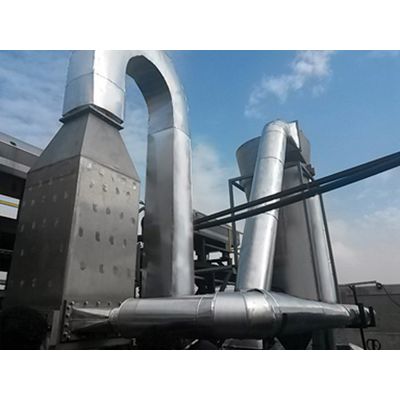
REDCO - Model RQD Series - Quick Dryers
The REDCO RQD series quick drying units are highly efficient sludge drying systems. The main advantage of the RQD series quick drying facility is its ability to produce high-dryness final products in limited space while performing this process at low costs. These quick drying systems are particularly useful for small-capacity treatment plants due to the low operating and investment costs. Additionally, the short sludge processing time makes it practical, allowing for easy operation and immediate sludge drying. The units dry the product by passing it through high temperatures in a short time, ensuring moisture is removed from within before reaching peak temperatures. In the process overview, the Quick Dryer breaks down the product into small pieces, providing pneumatic drying with hot air. As the suction fan draws the product, a pressure drop in the dehydrator allows moisture removal without excessively high temperatures, thereby minimizing fuel consumption.
REDCO - Solar Sludge Drying Plants
REDCO's Solar Sludge Drying Technology significantly reduces sludge mass and volume by utilizing renewable solar energy. Solar energy serves as a limitless and natural resource for evaporating water. Typically, 1000 liters of water require 720 kW of thermal energy to evaporate, but REDCO's technology reduces this need to just 30-40 kWh of electrical energy. The primary components include a moving steel bridge and an adjustable rotary drum. During the drying process, the wet sludge layer is consistently exposed to evaporation and ventilated to prevent odors. The sludge is evenly distributed throughout the drying chamber. The entire facility operates automatically with PLC control, limiting daily manpower requirements to just 20-30 minutes, thereby enhancing operational efficiency while reducing labor costs. This technology doesn't require additional energy sources and ensures high operational safety without constant operator intervention, although it does require significant land space. It offers a viable, economical solution for sludge disposal post-dewatering, supporting environmental sustainability while setting up modern facilities. The system's mechanical attributes include a total power of 16 kW, a drum rotation speed of 48 revolutions per minute, a bridge speed of 0.4 - 8 meters per minute, and a bridge length of 12 meters, with an approximate total weight of 4000 kg and a drum weight of 1000 kg.
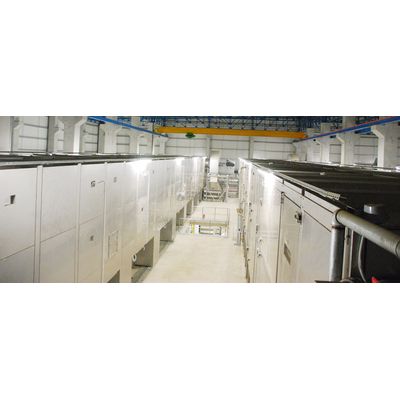
REDCO - Model RBD Series - Belt Type Sludge Dryer
REDCO RBD series belt dryer units are highly efficient sludge drying systems. The prominent advantage of the RBD series belt drying plant is its ability to produce a final product in granular form with high dryness and low emission with minimal dust, achieving this at low costs. The process involves highly dewatered sludge transformed into rod-shaped structures with an average diameter of 7-9 mm by an eccentric screw pump, which is then granularized and evenly spread on the belt. The arranged sludge enables effective air circulation for drying. The granulation unit comprises multiple nozzles and requires periodic washing or mechanical cleaning if blocked by foreign substances. Sludge on the conveyor belt moves within a tunnel where perforated belt design allows hot air to contact and dry the sludge uniformly, maintaining product integrity. The thermal energy needed for evaporation is provided by hot air, which is gradually cooled as it progresses. The highly dewatered sludge reaches approximately 85-90% dryness before falling onto a secondary belt to achieve about 90% dryness. Belt widths range from 2500 to 4000 mm, with adjustable speeds between 0.2-0.7 m/min, crafted from perforated stainless steel with PTFE or PFA coating on the top belt's contact surface. Additional product turnover systems ensure even drying, preventing adhesion and clumping. An optional water-cooled screw conveyor can be added at the dryer exit to reduce the product temperature to desired levels, making it suitable for direct transportation or pelletization. Heating and heat recovery in the drying process utilize waste heat, biogas, natural gas, electricity, or other energy sources, with a hot air generator producing the required hot air. Circulation air in a closed loop is reheated, while a portion undergoes condensation in a water/air heat exchanger, enhancing thermal efficiency and reducing waste air. Emission control ensures minimal dust and gas emissions, with online dust monitoring triggering safety mechanisms if thresholds are exceeded. The drying system operates at low temperatures, reducing odor and ensuring homogeneous drying while an aftertreatment wet scrubber system cools and filters the exhaust air to manage fine dust and odors effectively.