


Rutgers Office of Continuing Professional Education (OCPE)
3 Current Events found



Rutgers Office of Continuing Professional Education (OCPE) Current Events
Apr. 8-9, 2026 Online
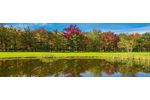
This online course is structured to help you make the proper decisions regarding the appearance, function, or up-keep of your pond. Starting with design, learn how to build a pond, including the construction of embankments and dams and the selection and installation of liners. You will also learn how to create and maintain a stable shoreline, create and aquascape littoral benches, and optimize habitat for fish and aquatic wildlife.
Long-term maintenance of ponds will also be discussed. Plus, discover new ways to maximize the aesthetics and wildlife attributes of your pond using aquascaping and bioengineering techniques! Learn how this innovative approach combines landscaping and evolving engineering solutions to correct eroded shorelines, create and maintain stable and attractive vegetative shorelines, and integrate native, non-invasive, easy to maintain, and attractive plant species into the design of new ponds or the retrofit of existing ponds.
May. 14-15, 2026 Online
Through case studies and discussions, discover how green infrastructure stormwater management practices can reduce flooding and provide aesthetic and societal benefits.
This online course is designed for landscape architects, engineers, planners, and environmental scientists looking to learn more about the application of green infrastructure stormwater management practices utilized as part of both new development and redevelopment projects. Emphasis is given to “small footprint,” retrofit green infrastructure techniques, which are especially suited for urban environments and managing the runoff responsible for localized nuisance flooding and combined sewer system overflows. Case studies, many of which are American Society of Landscape Architects (ASLA) award winning projects, are used to exemplify the actual, real-world implementation of green infrastructure techniques. Course presenters include regionally renowned landscape architects.
May. 26, 2026 New Brunswick
This 8-week hybrid course (online and in-person) followed by a 200-hour unpaid field training health department internship, provides the knowledge and hands-on experience you need to work in the field of environmental health. Successful completion of the program also qualifies you to sit for the NJ Registered Environmental Health Specialist (REHS) licensing exam. In New Jersey, an REHS acts as the front-line investigator for many of the state’s public health and environmental regulations. Although most EPH students work in NJ, many have parlayed their intensive training experience in EPH to secure jobs in states around the nation, from Maryland to Hawaii..
384 Past Events found
Rutgers Office of Continuing Professional Education (OCPE) Past Events
Mar. 19-20, 2026 Online
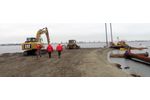
This online course is designed for ecologists, engineers, planners, and landscape architects involved in the recovery of impacted river, lake, riparian, wetland, and coastal environments. Drawing heavily upon real-world examples of Restoration Ecology in practice, this class will focus on the multi-disciplined recovery of degraded, damaged, or impaired ecosystems.
OBJECTIVES:
Attendees will increase knowledge of the multi-disciplined recovery of degraded, damaged, or impaired ecosystems, drawing upon real-world examples of Restoration Ecology in practice. They will exhibit understanding of Green Infrastructure Stormwater Techniques; elucidate FEMA’s National Flood Insurance Program Community Rating System; explain processes for reconnecting streams to floodplains; and display an understanding of stream daylighting, wetland banking, as well as regulation and design of ecosystems.
Feb. 11-12, 2026 Online
Virtually all activities conducted in and around wetlands are regulated and violators are subject to hefty penalties and fines from the NJDEP. Knowing if a wetland is on your property or a site on which you work is incredibly important!
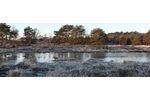
In this online course, a nationally recognized wetlands expert will review the skills you need to identify freshwater wetlands and their boundaries and introduce you to wetland plant identification and soil recognition. You’ll also find out how to access and use government maps in order to identify wetlands on your property, on lands you may be interested in purchasing, or on properties on which you conduct environmental, landscaping, or other site development or remediation work. You’ll even get a simple introduction to the practice of wetland delineation (the technical skill of determining a wetlands precise boundaries) – all in two half-day sessions!
Jan. 21-22, 2026 Basking Ridge & New Brunswick
This 2-day course gives you the opportunity to increase your wetland expertise by learning to identify vegetation during the winter months! Through a combination of classroom and field training, nationally recognized wetland expert Ralph Tiner will give you the tools to gain a competitive edge in the field of wetland delineation all year long.
By examining criteria such as bark, twigs, and other leafless characteristics, you’ll learn how to positively identify wetland plants even when winter conditions eliminate leaves as a distinguishing feature.
Day 1: January 21, 2026; 8 am – 4:30 pm - Basking Ridge, NJ
Day 2: January 22, 2026; 8 am – 4:30 pm - New Brunswick, NJ
Jan. 12-15, 2026 New Brunswick
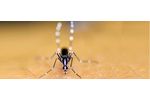
NEW COURSE! This four-day hands-on course provides participants with the essential skills and knowledge to accurately identify mosquito species prevalent in New Jersey using taxonomic keys.
Being able to rapidly identify mosquito specimens to the species level is critical for implementing effective surveillance and management strategies. This four-day hands-on course provides participants with the essential skills and knowledge to accurately identify mosquito species prevalent in New Jersey using taxonomic keys. Classes will be held daily from 9:00 am to 3:00 pm in a state-of-the-art, microscope-equipped classroom located on the Rutgers campus in New Brunswick.
Dec. 11, 2025 New Brunswick
Gain a basic understanding of the principles of geology, hydrogeology, and environmental chemistry, as well as how to use them when evaluating conditions at your site.
This program is designed for the non-scientist and will provide students with a basic understanding of geology, hydrogeology, and environmental chemistry. The fundamental principles will be presented in terminology that makes it easy to understand…even if your only background is high school chemistry. You will also learn how to use this information when evaluating environmental conditions at your site or property.
Dec. 4, 2025 Bordentown
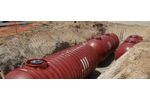
If you work on USTs, you need this course! Whether you are becoming certified for the first time or just need to recertify, you will get the regulatory information you need to stay current with New Jersey’s UST requirements and help your clients or employer avoid potential penalty liability. If you are renewing your certification, you must take a NJDEP-certified course within one year prior to renewal. Professional engineers and plumbing contractors, exempt from the certification examination, must attend the course within one year of certification.
Pre-registration is required. Visit website for details and registration information.
Nov. 12-14, 2025 Online
If you want your lake and watershed management efforts to be successful, you need a technically sound foundation. This course will give you the training you need to properly investigate and diagnose lake quality problems and to develop and implement cost-effective restoration measures.
Throughout the course, you will learn how to evaluate, protect, manage, and restore your pond, lake, or reservoir. You will receive detailed instructions, including numerous case-study examples, of commonly implemented lake and pond restoration and management techniques. The interactive nature of the course will provide attendees with the opportunity to discuss the specific issues and problems impacting the condition of their waterbody, whether that be a small pond, large lake, drinking water reservoir, or fishing lake.
Nov. 10, 2025 Online
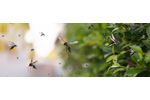
NEW COURSE! Learn how to monitor mosquito populations and implement effective strategies to reduce nuisance and disease risks.
This 6-week course focuses on the practical aspects of surveying, monitoring, and managing mosquito populations. It is designed to provide participants with the essential knowledge and skills to implement effective mosquito surveillance programs and apply a range of management strategies aimed at reducing nuisance mosquitoes and preventing mosquito-borne diseases.
Format: Flipped classroom: Listen to the asynchronous lectures at your own pace and join a mandatory weekly online session with the instructor to address any questions and enhance your learning.
Schedule: November 10, 2025 to December 19, 2025.
Weekly Commitment: Self-paced assignments = 2-3 hours per week. Live Zoom Q&A Session with instructors = 1 hour each week.
Nov. 4, 2025 Online
Test out your GIS knowledge and skill with hands-on GIS software application! With a focus on layout and core functionality, this 12-hour online evening course offers an overview of basic GIS and spatial analysis concepts, spatial data types and searching for geographic data, ArcGIS Pro components, and an overview of the ArcGIS platform. Increase your ArcGIS Pro and GIS proficiency with practical, in-class exercises!
Scheduled: 6:00pm-9:00pm Eastern on 4 consecutive Thursdays -- November 4, 11, 18, and December 2, 2025
Oct. 29, 2025 Bordentown
NEWLY REVISED! Is your facility required to prepare and submit DPCC and DCR plans? Learn how to prepare updates to current plans and ensure compliance with NJDEP rules.
This workshop will provide guidance on preparing updates to current DPCC and DCR plans, steps to ensure compliance with the plans and NJDEP rules and a discussion of the federal Spill Prevention, Control and Countermeasure (SPCC) “sister” program, and how discharges will be addressed under the Remediation of Contaminated Sites Rule.