


Rx Solutions applications
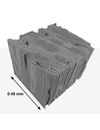
Visualize inside your component with an ultra-high resolution (0,35 µm). Industrial CT scanning gives the opportunity to visualize tiny details with an ultra-high resolution. With a resolution below the micrometer, details at a nano scale can be observed. Computed tomography is widely used in many industrial research labs, as automotive, plastic industry, oil and gas …,?to study and characterize?components, understand their?behavior and optimize simulations.
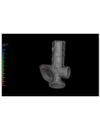
Inspect a component internally and externally. Industrial CT scanning is a great tool to visualize and quantify defects in 3D. X-rays in computed tomography are very sensitive to density material variations, and defects at different scales, down to hundreds of nanometers, can be detected.
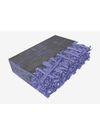
Understand composite parts behavior with CT scanning. Industrial CT scanning is a valuable non-destructive tool for the determination of fiber orientation and distribution in composite components, as well as the detection of fiber?agglomeration?and porosities, in combination with mechanical properties of the fibers and the matrix. Various parameters about individual fibers can be characterized, like tortuosity, fiber length or diameter, etc. Characterization and classification based on several criteria can be directly reported.
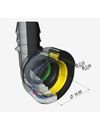
Determination of component`s geometries with an ultra-high accuracy in a single and fast scan. Industrial CT scanning has a growing number of industrial applications requiring dimensional metrology. The complexity and the variety of the products, combined with the request for cost and time-efficient solutions for production and product development, create new challenges in quality control.
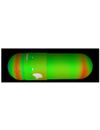
Determination of material thickness. Wall thickness is one of many metrological challenges which must be addressed by industrial designers. Most of the industrial components, including pipes, bottles, medical pills, airfoils, and turbines blades are specified by wall thicknesses to ensure the expected mechanical strength and weight.