


Shenzhen Chem Enviro Technology Co., Ltd products
Support Media
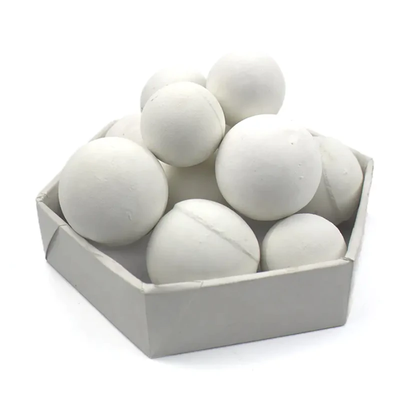
Alumina Grinding Ball
PRODUCT APPLICATION: a)High wear-resistance: The alumina balls wear-resistance is higher than the common alumina balls. When it is working, the ball wont pollute the grinding materials, so it can keep the purity and improve the stability of grinding materials especially the ceramic glaze. b)High density: The high density, high hardness and the high grinding characters save the grinding time, enlarge the smashing room. So it can improve the grinding efficiency.
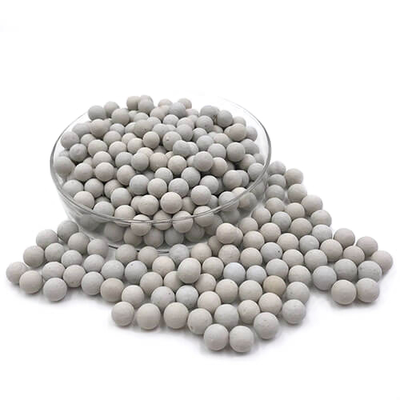
Ceramic Balls
17-23% Alumina Ceramic balls also known as Ceramic Catalyst Support Balls, is equal to Denstone® 57 Support Media. Chem Enviro company supplies a range of industrial grade inert ceramic support media, are widely used as the covering or supporting materials of the catalyst in the reactors and the packing in the columns in such varied areas, for examples, refineries, synthesis gas and other petrochemical processes. Products to these specifications are manufactured from very high quality chemical-porcelain clay materials, which has quite excellent stability, high mechanical strength and resistance to thermal shock, This makes them all ideal choice for support of all types of catalyst.
Adsorbent & Catalyst
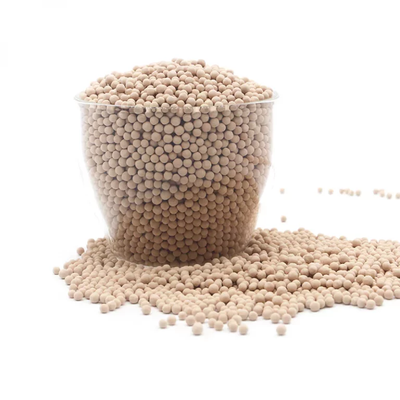
13X APG Molecular Sieve
13X APG Molecular Sieve is the sodium form of the type X crystal and has a much larger pore opening than the type A crystals. It will adsorb molecules with a kinetic diameter of less than 9 angstroms (0.9nm) and exclude those larger. It has the highest capacity of common adsorbents and excellent mass transfer rates. It can remove impurities too larger to fit into a type A crystal and is commonly used to separate N2 from O2. Chemical Molecular Formula: Na2O·Al2O3·2.45SiO2·6.0H2O. (SiO2:Al2O3≈2.6-3.0). Typical Application: Removal of H2O from the air for air cryo-separation application.
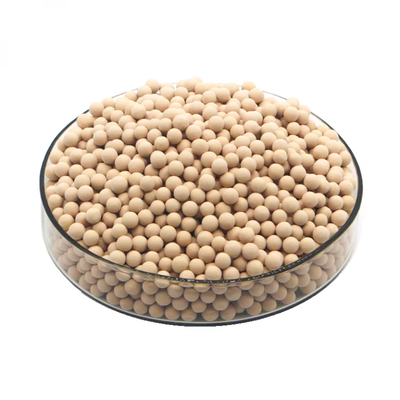
13X Molecular Sieve
Molecular Sieve 13X is the sodium form of the type X crystal and has a much larger pore opening than the type A crystals. It will adsorb molecules with a kinetic diameter of less than 9 Angstrom (0.9 nm) and exclude those larger. It also has the highest theoretical capacity of the common adsorbents and very good mass transfer rates. It can remove impurities too large to fit into a type A crystal and is commonly used to separate nitrogen from oxygen.