


- Home
- Companies
- Simpec S.r.l.
- Products
Simpec S.r.l. products
Demineralization Plants
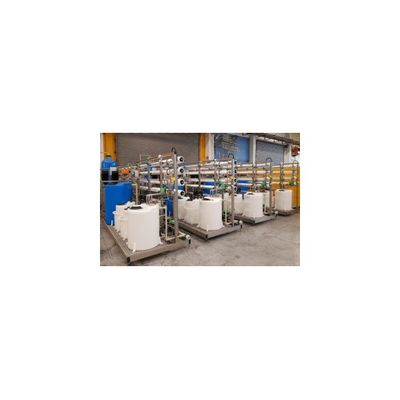
Simpec - Ion Exchange Resins Plants/Reverse Osmosis Plants
Demineralization is a chemical-physical process of treatment, typically of water (demineralized water), intended for the elimination, in whole or in part, of the salts dissolved in it. Simpec uses two major demineralization systems: ion exchange resin plants and reverse osmosis plants. The obtained water is demineralized, deionized or osmotized. The ions present in the water ensure the conduction of electric current, their elimination decreases conductivity or increases the water resistivity.
Simpec - Ion Exchange Resin Plants
Ion exchange resin plants are basically constituted by a cationic resin treatment section and an anionic resin processing section. These resins are provided with active functional groups, anchored to the matrix, capable of exchanging their mobile ions with the same charge ions contained in the solution they come into contact with. Cationic resins eliminate cations and the anionic resins eliminate the anions. Through the use of mixed bed resins (mixtures of cationic and anionic resins), Simpec provides ultrapure demineralized water systems with conductivity less than 0.1 μS / cm.
Simpec - Reverse Osmosis Plants
Reverse osmosis plants take advantage of the physical permeability principle of a membrane to obtain water demineralization. This process is not merely a physical obstacle (determined by the size of the pores of the membrane) to the passage of the molecules, but exploits the different chemical affinity of the species with the membrane, enabling the passage of hydrophilic (or water-like) molecules chemically similar to water. From the point of view of the plant, the method uses the principle of tangential filtration, as well as other membrane separating techniques such as microfiltration, ultrafiltration, nanofiltration and MBR Membrane Bioreactor (see membrane technologies). For ultrapure water production using reverse osmosis plants, Simpec uses double-step reverse osmosis systems combined with continuous electrodeionization units (CEDIs). The continuous electrodeposition CEDI systems combine the use of ion exchange resins with their continuous regeneration by the electric current.
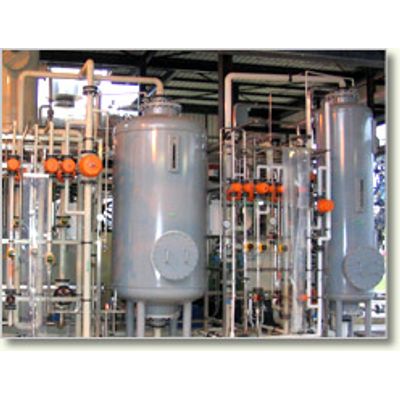
Simpec - Demineralization Plant
The demineralization is a chemical-physical process, generally applied to the water, destined to totally or partially dissolved salts elimination. Simpec produces two types of demineralization plants: ion exchange resin plants and reverse osmosis plants. The obtained water is called demineralized or deionized. The ions contained in to the water ensure current conduction, their elimination reduces the water conductivity and so it increases water resistivity.
Waste Water Treatment Plants / Chemical Physical and Biological
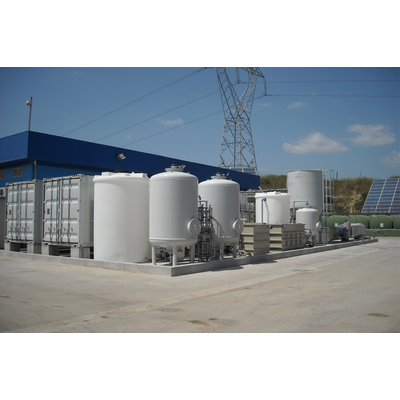
Simpec - Wastewater Treatment Plants
Our experience is available to Customers for the construction of wastewater treatment plants and purification plants according to current regulations and the country of reference. Physical chemical purification plants (continuous and discontinued by batch). Biological purification plants (active sludge, nitro denitro, oxidation). Industrial wastewater treatment plants from various production processes. Liquid waste disposal platforms for third parties and percolated treatment.
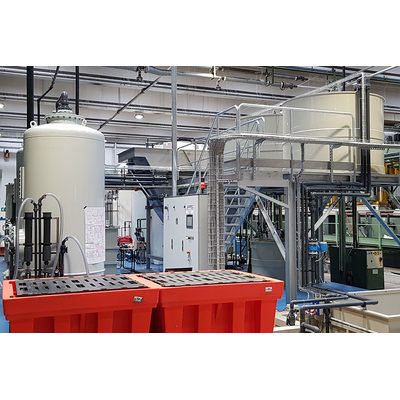
Simpec - Continuous and Discontinuous Physical/Chemical Plants and Biological Plants
Water and wastewater depuration takes place through a combination of technologies and processes needed to remove the pollutants contained therein. Simpec builds two main types of wastewater treatment plants: chemical/physical purification plants (continuous and discontinuous batch) and biological purification plants. In many situations, the two types of plants can coexist for the treatment of wastewater. The purified water can be discharged into surface water or drainage or alternatively, if possible technically and economically, reused in the production process by installing dedicated equipment (evaporation, osmosis, ultrafiltration, etc.).
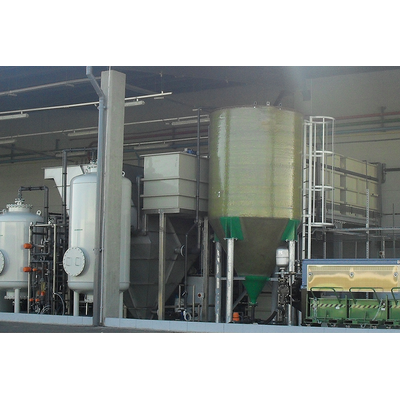
Simpec - Continuous and Discontinuous Chemical-Physical Plants
Chemical-physical plants make the pollutants insoluble by the use of chemical products and subsequently they separate the insoluble part (sludge) from the water (physical process).
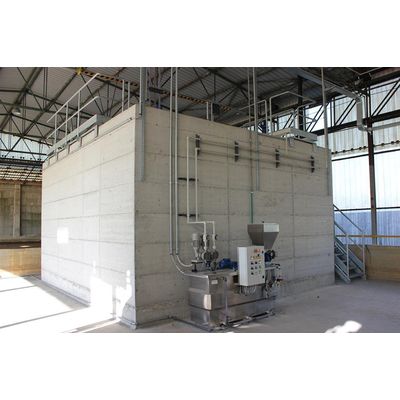
Simpec - Biological Wastewater Treatment Plants
Biological plants consist of a process that has as the main protagonists communities of living organisms (bacteria). The action of different microbial populations and in cooperation between them leads to the degradation of the pollutants present in the waters. The development and growth of these bacteria are determined by the organic substance contained in the reflux to be purified.
Membrane Plants: Reverse Osmosis / Ultrafiltration / MBR
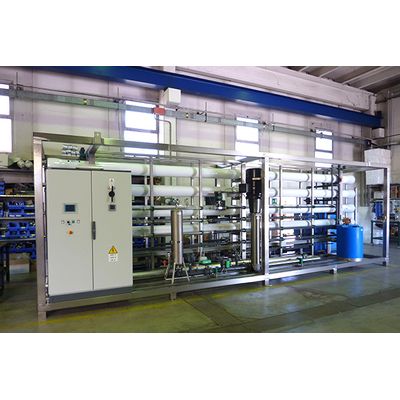
Simpec - Reverse Osmosis and Nanofiltration Plants
Reverse osmosis plants use the membrane selectivity to obtain the water demineralization. This process doesn’t consist only of a physical obstacle (produced by the membrane pores dimensions) to the passage of the molecules, but it use the different chemical affinity of the solutions with the membrane, permitting the hydrophile molecules (or water-like) passage.
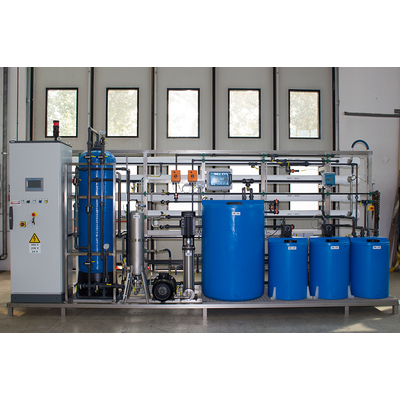
Simpec - Ultrafiltration and Microfiltration Plants
Ultrafiltration plants with ceramic membranes are mostly used to divide compounds with medium-high weight molecules. Ultrafiltration plants are applied at the effluent, on close loop, in order to reach the required concentration and a filtrate solution called permeate. The advantage of the ceramic membranes is that they resist to different kind of pollutants and they can be washed with various chemical products and at high temperatures.