

Sipag Bisalta S.p.a. products
Foundry
Bentonite-coal Dust Mixture and Lustrous Carbon Formers
Coal dust has been employed in green moulding sands since very ancient times. Several different substances and sophisticated – powder and liquid – products have been tried to replace it, without success. Its powerful peel-off action is its most interesting property at first sight, but the use of coal dust provides several other advantages. For a top quality coal dust to exert its beneficial action, it has to be ground from sea coal with a particular composition uniquely formed during specific geological ages. Coal dust employed by us is ground from suitable, constantly controlled quality sea coal, low in ash and sulphur, and high in lustrous carbon, with a constant release of volatile matter. Since proper size distribution is key to coal dust quality, we use leading-edge equipment for its most effective grinding. Our coal dust also contains a small bentonite percentage, to ensure against spontaneous combustion.
Sipag - Moulding Sand Additives and Auxiliares
Moulding additives are also used to lend specific features to the sand, in order to eliminate certain metal casting defects. We also produce foundry auxiliaries.
Metal Casting Bentonite
In metal casting, bentonite is used together with carbonaceous materials as an inorganic bonding material in green sand moulding. For this application, we supply a full range of top quality and high performing bentonite-based products to meet our customer needs. All our products have a high montmorillonite content, offer high thermal stability, excellent bonding power, and consistent quality. Further, we wish to point out that with our bentonite, no toxic emissions are released during mould making and casting.
Civil Engineering
Diaphragm Walls and Bored Piles
Drilling muds play a fundamental role in the construction of special foundations, since they are key to ensure digging stability, seal borehole walls through cake formation, as well as suspend drill cuttings and fines. Drilling muds are normally prepared by mixing bentonite with water. In some instances, bentonite is replaced with polymers. We offer a full range of products to meet the needs of different types of drillings, including bored piles and digging diaphragm walls with either mechanical grabs or trench cutters (hydro mills). All our products are used in all the most important building yards in Europe, and contain no environmentally harmful substances.
Cut-off Walls for Underground Vertical Barriers
Cut-off walls are underground vertical barriers with extremely low permeability employed for soil waterproofing and to seal off water seepage from landfills and contaminated sites. In the remediation of soils, HDPE liners can be inserted in the cut-off walls to provide 100% sealing. Cut-off walls are normally constructed with mechanical grabs and self-hardening mud used as drilling mud during digging and as a low-permeability barrier after setting. Other techniques are also employed, i.e. Cutter Soil Mixing (CSM), in which the soil is loosened and broken down by cutter wheels then mixed in-situ with self-hardening slurry to form a soil-slurry mortar.
Grouting for Pressure Injected
In geothecnical engineering, grouting is the process by which suitable grouts are pressure injected into the ground in order to modify its hydraulic and mechanical properties, by means of sleeved pipes. During the injection phase, employed grouts must present suitable penetration rate properties, and subsequently meet specific treatment requirements. Grout types and injection methods vary depending on the type of work, as well as on the shape and size of the voids to be filled. They are typically classified into cement and other chemical admixtures. With our comprehensive product range, we offer solutions for every type of project in this field.
Tunnel Boring Machines (TBM)
Tunnel Boring Machines (TBM) are employed in tunnel digging, with different functions: the main one is to dig the tunnel profile, stabilise the digging front, and carry excavated soils away from the tunnel head. When digging in soft and unstable soils, two different types of TBM are employed: Slurry Shield Machines and Earth Pressure Balance Machines (EPBM). The main difference between these two types lies in the method used to stabilise the excavation front. Slurry Shield machines use bentonite or polymer slurries injected onto the head of the tunnel to cool it down and prop up the front of the working face. Further, slurries form a cake which, in turn, stabilises and seals the tunnel face. In EPBM, pressure digging of the soil provides the necessary support to the working face.
Vertical Drilling
Slurries – often also called muds – play a key role in vertical drilling. Their main functions are: removing cuttings from the borehole and bringing them to the surface; tooling lubrication and cooling by reducing friction, thus increasing their average life; maintaining borehole hydrostatic balance to avoid its walls from collapsing. Drilling slurries may be prepared either with bentonite or with different types of chemical products commonly called ‘polymers’. Most importantly, slurries must be harmless to the environment. Our products are successfully employed in water well drilling in all types of soils.
Water Treatment
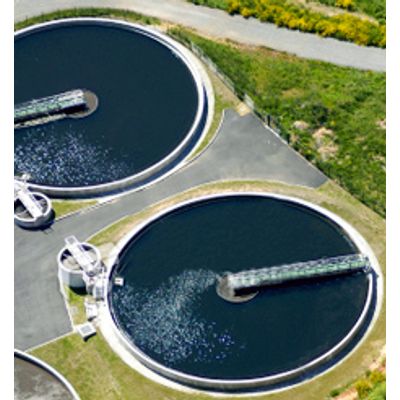
Sipag Bentobiol - Model TF and F - Water Treatment Systems
Due to its ion exchange, flocculation, and sedimentation properties, bentonite is used in environmental protection for water clarification and sludge treatment. In water treatment systems, bentonite is a mineral type of clarifying agent, just like aluminium chlorohydrate, aluminium sulphate, ferrous sulphate, and iron chloride. However, since it is not soluble, it is the only agent capable of forming suspensions that remain stable over time. Further, bentonite “captures” metal pollutants, through an ion exchange process, in which sodium ions – which are superficially bonded to the clay – are replaced with polluted metallic cations.