


- Contact Temperature Sensors - Thermocouples - Base Metal Thermocouples With Thermowells / Protection Tubes
- Contact Temperature Sensors - Thermocouples - MI Thermocouples
- Contact Temperature Sensors - Thermocouples - Noble Metal Thermocouples
- Contact Temperature Sensors - Thermocouples - Refractory Thermocouples
- Contact Temperature Sensors - Thermocouples - Special Thermocouple Types
- Contact Temperature Sensors - Resistance Temperature Detector - RTDs with Thermowells / Protection Tubes
- Contact Temperature Sensors - Gauges
- Contact Temperature Sensors - Fibre Optic Sensor - Fluorescence Based Fiber Optic Temperature Sensors
Tempsens Instrument Pvt. Ltd. products
Contact Temperature Sensors - Thermocouples - Base Metal Thermocouples With Thermowells / Protection Tubes
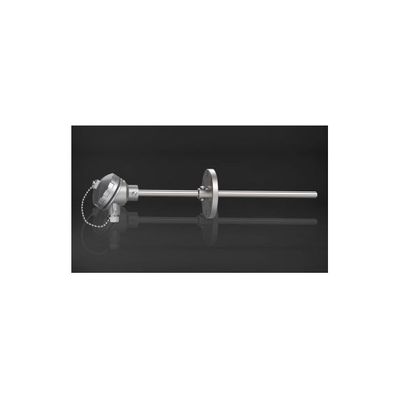
Tempsens - Model T - 502 - Thermocouple With Thermowell & Adjustable Flange
T - 502 Thermocouple With Thermowell & Adjustable Flange. Base Metal Thermocouple types are composed of common, inexpensive metals such as nickel, iron and copper. The thermocouple types E, J, K, N and T are of this group and are the most commonly used type of thermocouple.
Contact Temperature Sensors - Thermocouples - MI Thermocouples
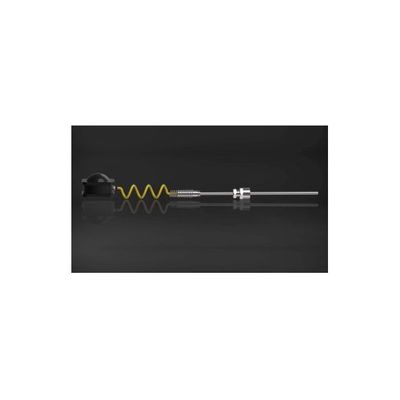
Tempsens - Model T - 274 - Thermocouple With Junction Box
T - 274 Thermocouple With Junction Box & Adjustable Compensation Fitting With Stub. Mineral Insulated Thermocouples, commonly referred to as MgO (Magnesium Oxide) thermocouples, are used in many processes and laboratory applications. They are available in all thermocouple element types and a wide variety of sheath diameters and materials. They are rugged in nature and bendable, and their fairly high-temperature ratings make MI thermocouples a popular choice for a multitude of temperature measuring applications.
Contact Temperature Sensors - Thermocouples - Noble Metal Thermocouples
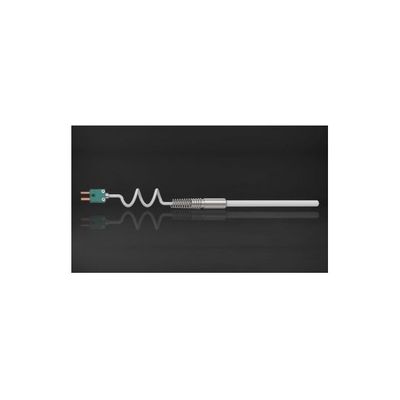
Tempsens - Model T - 800 - Standard Thermocouple With Cable & M-F Connector
T - 800 Standard Thermocouple With Cable & M-F Connector. Noble Metal Thermocouples are manufactured with precious or noble metals like Platinum and Rhodium. Noble metal thermocouples can be used in oxidizing or inert applications and must be used with a ceramic protection tube surrounding the thermocouple element. These are normally used for high-temperature applications. These sensors are usually fragile and must not be used in applications that are reducing or in applications that contain metallic vapors.
Contact Temperature Sensors - Thermocouples - Refractory Thermocouples
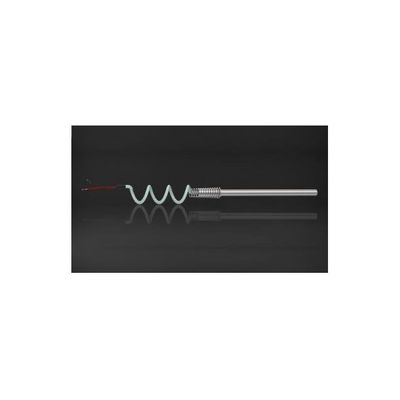
Tempsens - Model T - 988 - Ultra High Temperature Thermocouple With Cable
T - 988 Ultra High Temperature Thermocouple With Cable. Refractory Metal Thermocouples are manufactured from exotic metals Tungsten and Rhenium. These metals are expensive, difficult to manufacture and are brittle. These are used for high temperature, reducing or vacuum atmosphere conditions.
Contact Temperature Sensors - Thermocouples - Special Thermocouple Types
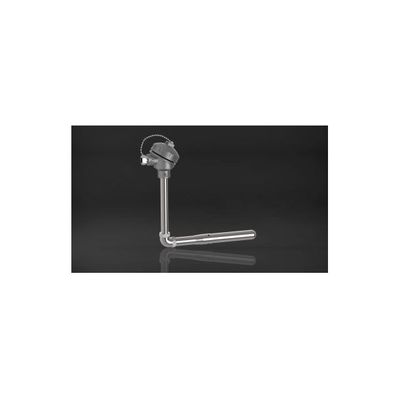
Tempsens - Model T - 950 - Thermocouple for Molten Aluminium
T - 950 Thermocouple for Molten Aluminium ("L" Shape).
Contact Temperature Sensors - Resistance Temperature Detector - RTDs with Thermowells / Protection Tubes
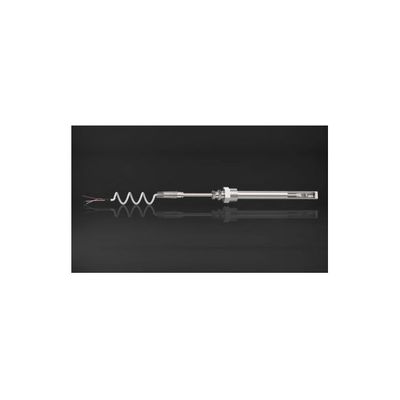
Tempsens - Model R - 504 - RTD with Straight Thermowell
R - 504 RTD with Straight Thermowell Adjustable Comp. Fitting & Cable. Resistance thermometer use metals that alter their electric resistance when heated. Platinum is the most commonly used material for industrial RTD. However, Copper and Nickel are also used for some applications.
Contact Temperature Sensors - Gauges
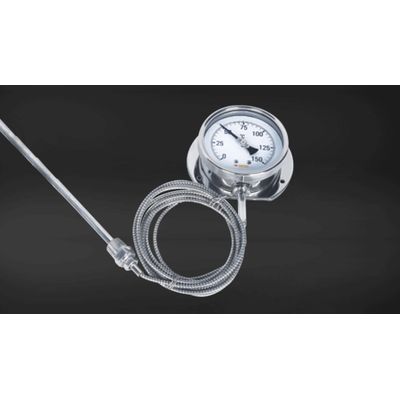
Tempsens - Model GET/LET - Gas/Liquid Expansion Thermometer
A gas expansion thermometer is made of a cylindrical bulb filled with inert gas & uses the volume expansion of gases at temperature changes. Gas pressure changes inside the bulb due to temperature changes, are sensed by a special helicoil bourdon tube, which, connected to an amplifying device will give the pointer, movement proportional to the temperature. The physical properties used will enable linear readings on the dial from the origin to full scale. When the reading is remote from the sensing point, a capillary is then used for transmission between the bulb and the thermometer head. Capillary armoring is common practice in industrial environments.
Contact Temperature Sensors - Fibre Optic Sensor - Fluorescence Based Fiber Optic Temperature Sensors
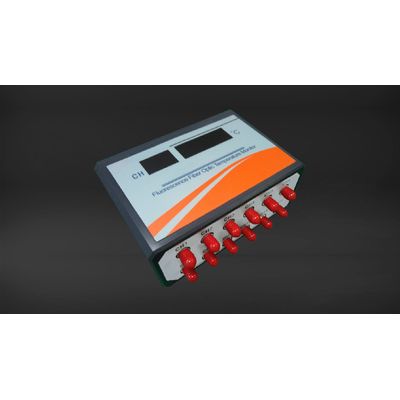
Tempsens - Model TQ-12 - Fiber Optic Temperature Sensor for Switchgear Busbar
The system senses temperature by measuring fluorescence decay time. The fiber optic sensing probe is attached with rare earth fluorescent material, when rare earth material is excited by specific wavelength light, it will generate visible spectrum which is fluorescence. When the light stops, the time required for the fluorescence to decay depends on the rare earth material temperature . Normally higher temperature comes with shorter decay time.The biggest advantage of this temperature sensing technology is that the temperature measurement result only depends on the decay time of fluorescence, no other variables like intensity of light, transfer efficiency, and degree of coupling.