

- Home
- Companies
- VideoRay LLC
- Applications
VideoRay LLC applications
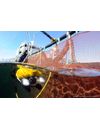
The VideoRay ROV (Remotely Operated Vehicle) offers a simple and cost-effective solution to necessary aquaculture inspection work with pens, nets, mooring points, stock health, and feeding – without the expense of divers and from a comfortable, warm, dry location. The portable ROV system can easily be moved around the platform by one person to access areas of interest on both the interior and exterior of the netting as well as confirming the integrity of mooring points. You can quickly identify potential fish loss through rapid net inspections, find expensive lost equipment, perform regulatory compliance work, monitor feeding habits, and recover morts with the VideoRay P4 AQ 300MS Aquaculture ROV Configuration`s robotic grabber arm.
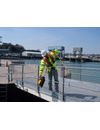
Much of the world`s crucial public infrastructure involves water. Potable water tanks, reservoirs, locks, dams, bridges, and culverts are aging everywhere, and scarce funding must be allocated carefully and efficiently to the most critical problems. In order to do this, regular detailed inspections are needed. Until the arrival of underwater robotics solutions such as VideoRay ROVs, these inspections were often either done with expensive, dangerous solutions involving divers, or they weren`t done at all. In many cases a VideoRay inspection can be done rapidly, safely, and very cost-effectively. The results – video and still images of specific problem areas – can be transmitted and presented to experts who can decide whether the asset is okay for now, whether further study is needed, or whether immediate action is necessary to protect the public.
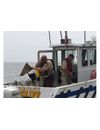
Law Enforcement Overview: The VideoRay Remotely Operated Vehicle (ROV) is by far the most popular and effective underwater investigation tool for Law Enforcement applications. Hundreds of VideoRays have been used by local, state, and regional authority in the United States and most other countries around the world. They are the standard unit for the United States Coast Guard, deployed at all units equipped with underwater technology.

VideoRay ROVs have proven themselves as one of the easiest, safest, and most cost-effective solutions for hydro structure inspections. The compact and portable system can easily be deployed and piloted by a single operator while capturing high resolution color video for your documentation needs. Weighing in at roughly 4 kg (10 lb), the submersible can easily be raised and lowered over long spans of time without the stress involved in deploying other 15 to 20 kg (35 - 45 lb) observation ROVs. Quality and power are not lost with the reduced size as the powerful brushless thrusters can pull long lengths of small diameter tether through small diameter pipes or inlets. Observe potential erosion or leak problems before they turn into costly repairs, send the ROV into dangerous areas where diver safety is an issue, and gain an overall perspective into the integrity of aging infrastructure quickly and safely.

Nuclear energy facilities` need to be inspected and/or decommissioned once they reach the end of their operational lives calls for a safe and easy way to maneuver around radioactive terrain. The VideoRay ROVs can be used in a variety of ways to observe and explore nuclear hazards that would, under normal circumstances, be inaccessible to humans. With the ability to capture footage and photographs, the Pro 4 allows engineers to document detailed information about every centimeter of a nuclear area.
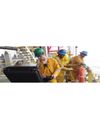
The offshore industry is one of the primary beneficiaries of small ROV evolution. In this market, there is a considerable history of ROVs that handle underwater work in deep water (greater than 300 meters) depth ratings, or the ability to carry heavy payload or tools. Larger "Work Class" ROVs that perform these feats are a multi-billion dollar industry that had developed to meet oil and gas exploration, production, and handling tasks.
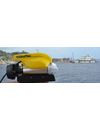
VideoRay Pro 4 ROVs were used extensively as part of the Costa Concordia wreck removal project, which began in May 2012. The groundbreaking operation relied on 7 VideoRay Pro 4 ROV systems to provide eyes underwater in the extremely challenging and dangerous environment around the wreckage site. The ROVs – and their tireless operators – have worked around the clock for two years monitoring divers, penetrating the wreck, and conducting site surveys. Since the operation began in 2012, VideoRay ROVs have recorded over 45,000 hours of footage on the Concordia wreck, in what is considered one of the largest uses of observation class ROVs on a single job in history.
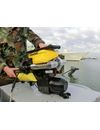
As weapons technology constantly advances, force protection tools and techniques must evolve at a rapid pace to keep humans out of harm`s way. Militaries have relied on robotic aids for the last decade, using bomb disposal robots on the ground, unmanned drones in the air, and remotely operated vehicles (ROVs) underwater. When it comes to protection from underwater threats, VideoRay is on the front line.

VideoRay Remotely Operated Vehicles have found several different roles in science and research. Many projects investigating underwater archaeology or marine life and their habitats involve long periods of observation – something ideally suited to VideoRay ROV capabilities. Scientists find that a rugged tool that can be easily transported and deployed from small boats or through long holes in ice allows them to collect data in locations where no other technique would work.
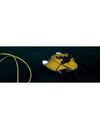
Regular inspections of potable water tanks and reservoirs are crucial to maintaining clean, safe water sources for the public. However, tanks and underwater infrastructure create an environment that poses a serious risk to divers and is often inaccessible to larger equipment. Combined with the waning budgets of public agencies and water districts, these obstacles can prohibit proper maintenance of essential infrastructure. With a VideoRay Remotely Operated Vehicle, keeping the public safe - and hydrated - is simpler and safer than ever.