


- Home
- Companies
- Weidmann Electrical Technology AG
- Applications
Weidmann Electrical Technology AG applications

Celova is produced from the same raw material as paper and therefore shows high affinity to pulp fibers and is compatible with standard paper making chemicals.
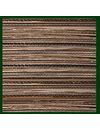
With its unique properties Celova opens up new possibilites for the packaging industry and drives the development for sustainable and recycable packaging solutions. Apart from reducing packaging weight by increasing the mechanical properties of the board, Celova can also improve barrier properties.

Celova provides the opportunity to use a sustainable and recyclable material to create highly functional coatings in various paper and non-woven based materials.
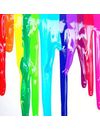
With its fine network structure Celova is able to trap the pigments and evenly distribute them in the suspension. In water-based paints microfibrillated cellulose can thus be used to prevent sedimentation, distribution and yield of pigments. Additionally, the thixotropic (shear thinning) characteristic of Celova makes it ideal as a rheology modifier without reducing spray- or spreadability.

Celova is the new natural alternative to synthetic additives for personal care.

Cellulose is an insoluble dietary fiber and can be used as a vegan, gluten- and fat free additive. While microcrystalline cellulose is already widely used in the food industry, microfibrillated cellulose offers new possibilities. In comparison to microcrystalline cellulose, Celova does not consist of rigid particles but is built up by a flexible network of fibrils that have crystalline and amorphous regions.

For non-woven based filters Celova is a great alternative to standard binders. Not only is the material natural but its fine network structure of cellulose fibrils is ideal to trap particles in it. Furthermore, due to the high surface area and thus high amount of accessible hydroxyl groups, Celova can be chemically modified to catch molecules and ions.
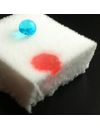
This new, absorbant material from EMPA wood research (EMPA is the German acronym for the Swiss Federal Laboratories for Materials Science and Technology) could be of assistance in future oil spill accidents: a chemically modified microcellulosic aerogel. The light-weight material absorbs the oil spill, remains floating on the water surface and can then be recovered. The absorbent is produced in an environmentally-friendly manner from recycled paper, wood or agricultural by-products. It can be produced without chemical modification, or modified to empart the aerogel with hydrophobic and oleophilic properties amongst others.
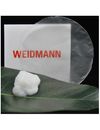
The use of films made of Celova is a very effective solution for some specific problems experienced with museum objects and could be a perfect solution for other problems on a wide range of media, such as graphic, photographic and cinematographic artworks and documents, old or contemporary, made of translucent or transparent supports. See our blog post for more inspiration on how to use MFC in the world of art conservation.