

Weifang Senya Chemical CO.,LTD products
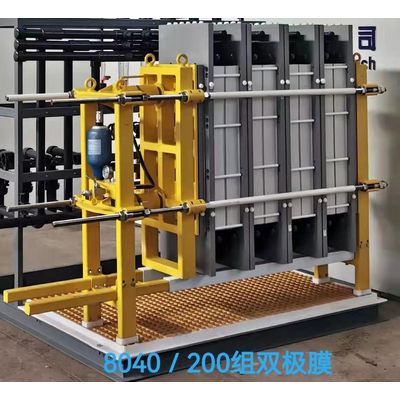
Bipolar Membrane Electrodialyzer BPED
The bipolar ion exchange membrane electrodialysis is an electrodialysis formed by combining bipolar membranes and unipolar membranes in different ways. Bipolar membrane electrodialysis combines the dissociation of salts of ordinary electrodialysis with the dissociation of H2O molecules in bipolar membranes. In this way, the corresponding salt ions in the solution combine with the hydrogen ions and hydroxide ions generated by the hydrolysis of the bipolar membrane to convert into corresponding acids and bases. Bipolar membrane dissociation water has no gas or by-products, which will reduce the voltage and maximize the use of energy. In the same bipolar membrane electrodialysis membrane stack, inorganic and organic salts can be converted into corresponding acids and alkalis. Bipolar membrane electrodialysis is mainly used for the regeneration and reuse of acid and alkali in salt preparation; clean production of organic acids and alkalis.
Homogeneous Ion-Exchange Membrane
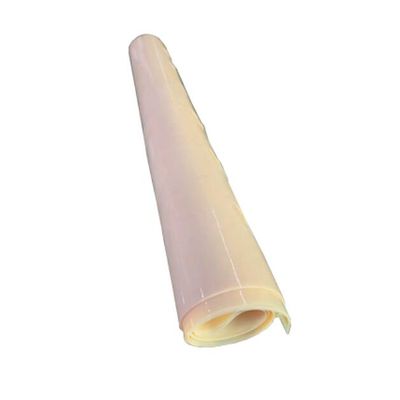
Anion Exchange Membrane
The anion exchange membrane, also called anion permselective membrane is a class of high molecular polymer membranes that contain basic active groups and have selective permeability to anions. They are also called ion-selective membranes. The anion exchange membrane is composed of three parts: the polymer main chain with a fixed group, that is, the polymer matrix (also known as the base membrane), the positively charged active group (ie, the cation), and the anion that can move freely on the active group. The anion exchange membrane has a very wide range of applications. It is an important part of separation devices, purification devices, and electrochemical components. It plays an important role in the fields of Chlor-alkali industry, water treatment industry, heavy metal recycling, wet metallurgy and electrochemical industry Role.
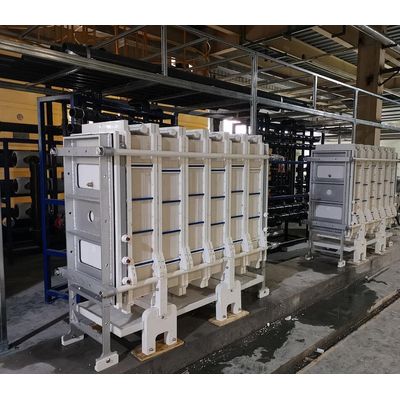
Electrodialysis Membrane Stack
Electrodialysis refers to the directed migration of ions in a solution under the action of a direct current electric field, selectively passing through an ion exchange membrane and removing charged ions from the solution. A physicochemical process that separates solute from water by using the potential difference as a driving force and utilizing the selective permeability of the anion and cation exchange membranes to the anion and the cation. It can realize the desalination of brackish water or seawater, salt concentration, desalting and refining of organic solution. In electrodialysis, there are a cation exchange membrane that allows only cations to pass through and an anion exchange membrane that allows only anions to pass through, and the two ion exchange membranes are alternately arranged to constitute a desalination chamber and a concentration chamber.
Perfluorinated Sulfonic Acid Ion Selective Membrane
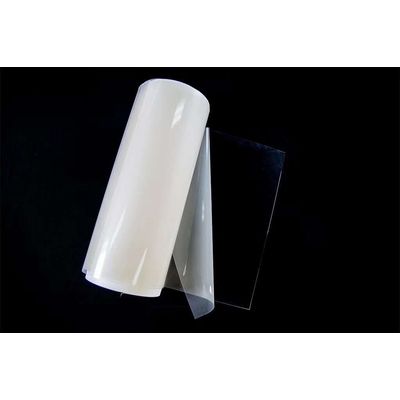
Model SY-11P - Perfluorinated Ion-Exchange Membrane
We have focused on the ion exchange membranes production for many years, the ion exchange membranes SY-11P is widely used in many field, such as flow battery, fuel cell, and so on. The ion exchange membranes with the thickness 76um, 89um,102um and 127 um is widely used in the vanadium flow cell, you can choose the suitable ion exchange membrane for your application. The perfluorinated ion exchange membranes SY-11P are non-reinforced films based on chemically stabilized perfluorosulfonic acid, we produce the cation exchange membranes with the new casting method, the casting process can be combined with doping technology,we add new fluororesin mixing formula with good vanadium resistance in the casting process, the Ion-Exchange Membrane has high tensile strength, isotropic, high electrical conductivity, good chemical properties, and so on.
Model SY-12P - Perfluorinated Ion-Exchange Membrane
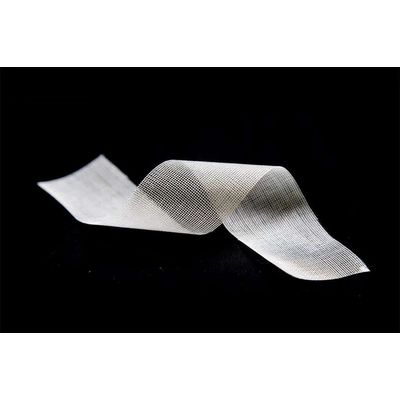
Ion exchange membranes (PIEM) are selective membranes of cations, usually sulfonic acid type, with immobilised groups and cleavable ions. For example, the sodium-type sulfonic acid-type immobilisation group is sulfonate, and the dissociation ion is sodium ion. . The cation exchange membrane can be regarded as a kind of polymer electrolyte. Since the positive membrane is negatively charged, although the original dissociated positive ion is dissociated into the water by the action of water molecules, it is energized by the electric field outside the membrane and is positively charged. The cations can pass through the positive film, while the anions cannot pass because of homosexual rejection, so they have selective permeability.