


Zygo Corporation - AMETEK, Inc applications
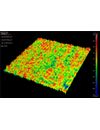
As technology pushes forward, surfaces are being manufactured with exacting control and the need to measure surface texture with high precision and accuracy has become even more critical. When it comes to roughness measurements, there are 3 important factors: measuring the surface, processing the data, and reporting the results.

The performance of optical systems such as telescopes, camera lenses, and laser systems rely on the quality of the optical components within the systems. Many plano optical components appear completely parallel from a side view, however there is typically some wedge between the sides. In extremely precise systems, knowing the degree of a window’s wedge is crucial.
ZYGO laser interferometers are powerful and precise instruments for measurement and characterization of optical components and systems. One of the most common applications include the measurement of the radius of curvature. The radius of curvature is a fundamental and functional parameter of spherical optical surfaces, which requires quality control during manufacturing.
Transmitted wavefront error (TWE) is used to qualify the performance of optical elements as light passes through.
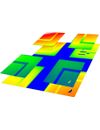
Precise characterization of thick and thin film topography and thickness, and substrate topography. There are many applications in which the deposition and control of films and coatings is critical to enabling functionality or efficiency of devices, including consumer electronics, semiconductors, optics and many more. Such advanced devices often demand accurate characterization of film topography and layer thicknesses to ensure high quality and performance.
Manufactured surfaces can take on many shapes and sizes. For surfaces where the characterization of shape is function critical, ZYGO laser interferometers and 3D optical profilers stand out with sub-nanometer repeatability of non-contact surface data. Incorporating industry standards for form and flatness into Mx™ analysis software creates a single stop measurement tool for surface inspection. Explore the solutions for your application in surface form and flatness metrology below.
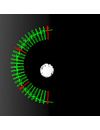
ZYGO can extend its capabilities to enable sub-pixel 2D metrology from the same data used to report 3D metrology results. Users have the choice of using either height or intensity data to make these lateral measurements. Parameters such as line and space widths, hole dimensions, and feature to feature relationships are possible. ZYGO’s 2D metrology solutions are not only used for lateral dimensions, but also enable production and automation environments. 2D metrology can be used to identify features for part alignment to ensure reliable and repeatable metrology solutions in production style measurement.
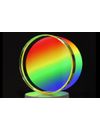
An important property of an optical component is the variation of the refractive index of the material from which it is made, broadly referred to as homogeneity. Material inhomogeneity causes variation of the refractive index in a glass, which can be in the form of sharp, cord-like regions called striae or it can occur as a gradient of the refractive index through a larger region of the sample. Material index variations must be qualified to ensure their impact is within tolerance for a particular optical design where the material is used.

Products we use every day, and those being developed for the future, create demand for precision parallel optics like wafers, display glass, disk drives, etalons and waveguides. The variation in thickness of these kinds of optical components, known as Total Thickness Variation or TTV, can be critical to qualify and control precisely. TTV defines the maximum physical variation in thickness of a parallel window or concentric spherical optic, but can be measured optically. An optical measurement enables a large area to be measured at a high lateral sampling rate and with extremely small vertical resolution.
Measuring volumetric properties of a surface is most often used in wear analysis of lubricated surface but has uses in many other applications such as adhesion, porosity, and particle distribution.