
- Home
- Companies
- American Biogas Council (ABC)
- Events
- 33.5 PDH In-Person Digester Operator ...
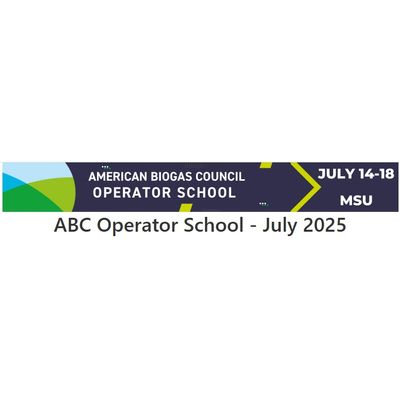
33.5 PDH In-Person Digester Operator School
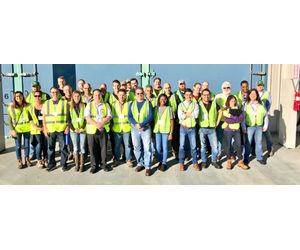
Each ABC Operator School event we offer is unique and distinct from the next. What makes this one special is that you’re in-person and in the field with real operators. MSU not only has excellent teachers that specialize in anaerobic digestion with top-notch teaching facilities, they own and operate a digester and they run a commercial lab that digester owners, operators and designers from all over the country use. Former students love our in-person Operator School it for its hands-on style, authenticity, and summer camp vibe. Past classes have been known to bond quickly, host informal happy hours and ping pong tournaments to wind down, and even request evening pizza parties to get more time with the instructors.
The digester tours are also special because while they are commercial operations, they are owned and operated by friends of the ABC. This means that the operators giving you the tours are especially open and transparent about what works well and what doesn’t. You’ll get to visit a wide variety of digesters including municipal/wastewater, landfill, dairy, and more.
Module 1 - Fundamentals of Anaerobic Digestion
This is the foundation for everything operators and anyone in the biogas industry needs to know. As such, almost every course will include and start with this module. We’ll cover the 4 steps of AD including the actual chemistry and biology so you know what to test for; vocabulary and concepts like BOD and VFA/Alk ratios; how to monitor AD performance; and how the primary characteristics of different digesters require a different approach to their operations.
Module 2 - Substrate as Potential Energy
This module is focused on “viewing” all substrate as how it is actually Potential Energy for the digester. The view is from the context of the bugs that actually perform the work. When a $45B industry is based on a group of bacteria and organisms, the “bugs”, it is good to think like a bug. Highlights of this session are focused on estimating biogas production and understanding decay of substrates.
Module 3 - Math for Digesters
This module consistently ranks as the most valuable by our past students. For those of you who haven’t had math in a while, we are providing several video learning opportunities in the weeks leading up to the in-person session. For the in-person we’ll start slowly talking about how to keep track of units when doing your calculations, imperial/metric conversions, how to monitor overloads, converting biogas into energy values, and business considerations like determining the value of heat and electricity compared to renewable natural gas. Finally, we’ll walk you through how to determine whether you should accept a truckload of material that shows up at your door. Will the material make money or will it cost you more to deal with the water because there’s so little biogas potential in its contents?
This is a highly rewarding session and will add considerable depth to the operator’s tool box if the opportunity is taken. A must for passing the certification test.
Module 4 - Mechanical Systems
Although emphasis is often and rightly placed on the biological aspects of digester operation, it is important to remember that an AD system is primarily a MECHANICAL SYSTEM. Understanding how to make sure the mechanical systems are operating optimally is critical. We’ll cover receiving material, conveyance, storage and pre-treatment; then mixing, heating and gas handling; finally, we’ll take you through digestate separation, and handling the separated liquids and solids.
Module 5 - Hydraulics (pumps, mixers, etc)
Some of our expert operators think we should spend a day and half on hydraulics because as operators, you’re handling hydraulic issues every day. But we’ve condensed the essentials of pumps, mixers, monitoring systems and more into a fraction of that time to raise your knowledge quickly and effectively.
Module 6 - Lab Testing. What does it all mean?
You’ll learn directly from the experts who have experience running a lab to understand how to use lab work to help digester performance and to trouble shoot issues. Plus, we’ll help you learn how to apply the results from the lab tests your order and what it all actually means.
Module 7 - Odor Management/Prevention
Odor management and prevention starts and ends with good digester operations. We’ll show you which operations in particular most relate to odor issues so you know what to focus on first. This module is often interlaced with story time—anecdotes of what went wrong at some digesters and how those issues could have been prevented or management more effectively. If you’d like to dive into this issue more, the ABC has a day long course called “Odor Management at Anaerobic Digestion Facilities” which is available on-demand, anytime online (https://americanbiogascouncil.org/odor-management-at-anaerobic-digestion-facilities/)
Module 8 - Safety
The safety module usually lasts a full day. We’ve offered to past students to try to reduce the time we spend on this important topic, but universally, we’re told, all this time is needed. We’ll cover H2S dangers, lockout/tagout, operating in confined spaces, rescue procedures, hot work, flammable and explosive properties, hazard communications, process safety and security, MSDSes and more.
Module 9 - Gas Utilization
This session is considered the most popular year in and year out. No matter if your site is producing renewable natural gas or electricity, the raw biogas must be pre-treated and either consumed or pass on for off-site use. This module covers high level H2S removal, biogas upgrading to RNG/pipeline quality, engines, and managing both gas and electrical interconnections with the local utility.
Module 15 - Elements of Safety at Upgrading Facilities
A new session but certainly timely and important for all operators, no matter if your site is upgrading or not. Lessons learned and a good understanding of the safety issues specific to biogas upgrading are presented. For landfill and digestion system operators.
Module 14 - Process flow overview/block diagram for site visits
This module is both an application of the content that you’ve learned in the previous modules and preparation for the tour this afternoon. It’s often loud on site, so we’ll cover some of the technical details when it’s easier to hear to enhance the value of your experience on site.