


Aqua Enviro
- Home
- Companies
- Aqua Enviro
- Events
- Microscopic Examination for the ...
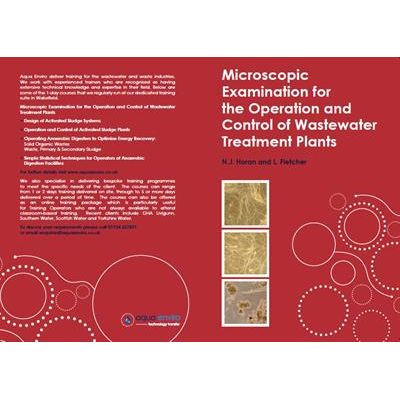
Microscopic Examination for the Operation & Control of Wastewater Treatment Plants
All wastewater treatment plants will experience operating problems from time to time, and some plants a lot more than others. Very few activated sludge plants have been completely free from foaming and bulking problems at some time and other plants suffer these problems on a routine basis. In a similar way poor solids removal, inefficient BOD removal, odour problems, inhibition and toxicity can all occur on a seemingly random basis. Routine sampling and chemical analysis from this is expensive, demanding and its interpretation is not always clear. By contrast microscopic examination of the microbial consortium in the treatment plant is simple, inexpensive and provides extensive information as to the likely causes of plant problems. The results can also be used to optimize the performance of the plant to ensure that effluent is as good as the plant is able to produce and that energy costs and sludge production are at a minimum.
The book By Dr Nigel Horan is given to all delegates
Most popular related searches
wastewater treatment plant
wastewater treatment
activated sludge plant
plug flow reactor
wastewater plant
microscopy
chemical analysis
BOD removal
filamentous bacteria
activated sludge
Event Type:
Workshops/Training Courses
Date:
Mar. 5, 2015
Venue:
Aqua Enviro Training Suite, 9 Appleton Court, Calder Park
Location:
Wakefield
The Protozoa
Introduction to floc morphology and protozoa
- What are they?
- What conditions do they like/dislike
- What they tell us about the process conditions
- Which protozoa are healthy for the plant
Lab session
- Using the microscope
- Floc structure
- Protozoa identification
- Filament numbers
Interpreting the results of microscopic examination
- Health of the plant,
- Changes that may have occurred in the influent,
- Process conditions (F/M, sludge age),
- Problems with the process (low O2, under/overloading,
- Nutrient deficiency,
- Toxicity
The Filaments
Filament identification
- Filament characteristics on wet mounts
- Cell size, shape, filament width, length, branching etc.
- Staining, Gram, Neisser, sulphur
Lab session
- Methods for identifying species
- Filament characteristics on wet mounts
- Identification charts
- Stained filament characteristics
- Gram and Neisser Staining
Control strategies for filamentous bacteria
- Chemical and physical strategies
- Chlorination
- PAC
- Spray jetting
- Design considerations to eliminate filaments
- selectors
- floc loading
- plug flow reactors