

- Home
- Companies
- Henan Doing Machinery Equipment Co., ...
- News
- Applications of Pyrolysis Technology in ...

Applications of Pyrolysis Technology in Hazardous Waste Treatment
Advanced hazardous waste treatment technologies, including physical, chemical, and thermal processes, are transforming the waste management landscape. Regulatory policies emphasizing waste reduction, recycling, and sustainable disposal are driving market growth. Governments worldwide are implementing stricter regulations to minimize environmental impact, leading to a growing demand for hazardous waste treatment solutions.
Compared to direct incineration, pyrolysis technology can more effectively control secondary pollution and achieve resource recovery. It is a significant development direction in the field of hazardous waste treatment. Solid waste pyrolysis is the process of converting the organic components in hazardous waste into syngas, pyrolysis oil, and solid residue under anaerobic, high-temperature conditions.
Advantages of Pyrolysis Technology in Hazardous Waste Treatment
Hazardous waste pyrolysis treatment demonstrates significant advantages in environmental protection, waste volume reduction, and resource conservation. Pyrolysis technology has become one of the key technologies for addressing the complex challenges of hazardous waste treatment.
Significant Volume Reduction
After pyrolysis, both the volume and mass of hazardous waste are significantly reduced. Typically, pyrolysis can reduce the volume of hazardous waste by more than 80% and the mass by more than 70%.
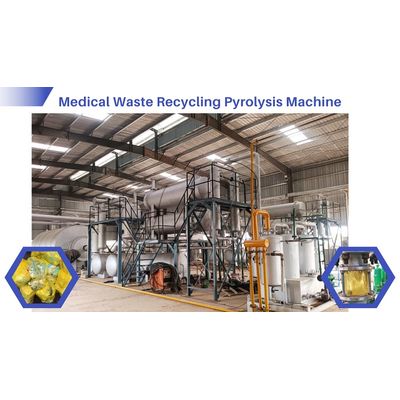
For example, medical waste is bulky and complex in composition, and traditional landfill disposal requires a large amount of land. After pyrolysis, most of the organic components of medical waste are converted into gases and liquids, with the remaining residue only 10%-20% of the original volume. This significantly reduces the pressure on subsequent landfill or further disposal, minimizing land occupation.
Strong Pollution Control Capabilities
The anaerobic or anoxic environment of the pyrolysis process inhibits the formation of dioxins at the source. Dioxins are common and highly toxic pollutants in hazardous waste incineration, requiring sufficient oxygen and a specific temperature range (200-400℃) for formation. The pyrolysis unit avoids these conditions, therefore dioxin emissions are far below national standards.
Simultaneously, the gaseous and liquid products generated by pyrolysis can be treated by a subsequent purification system. This system can remove pollutants such as sulfides, nitrogen oxides, and heavy metals, ultimately meeting emission standards. Pyrolysis coke and residue can be stabilized to ensure no leakage of hazardous substances.
Significant Resource Recovery Potential
Utilizing pyrolysis technology to treat hazardous waste can convert organic components into usable energy or raw materials, aligning with the concept of a "circular economy."
For example, the calorific value of pyrolysis gas generated from hazardous waste containing organic solvents is 15-25 MJ/m³, close to that of natural gas, and can be directly used for boiler combustion and heating. The calorific value of pyrolysis oil is approximately 40-45 MJ/kg, and after distillation and refining, it can replace diesel and heavy oil in industrial kilns.
For hazardous waste containing metals (such as waste tires and cables), pyrolysis processes can decompose organic resins, facilitating subsequent metal recovery and achieving efficient resource recycling.
Prospects for Hazardous Waste Pyrolysis
The hazardous waste management market is experiencing continuous growth, and advanced thermal treatment technologies are a key driver of industry transformation. Pyrolysis technology, with its advantages in resource recovery and pollution control, demonstrates broad development prospects. DOING Group is committed to providing more efficient and cleaner hazardous waste treatment and recycling solutions.
When considering pyrolysis equipment, it is recommended to comprehensively evaluate the following points:
Waste Characteristics: Analyze the waste's composition, calorific value, moisture content, heavy metal content, etc., to determine its suitability for pyrolysis treatment.
Project Scale and Economic Benefits: Assess the waste generation volume and calculate investment and operating costs. Investigate local market access and pricing for byproducts such as pyrolysis oil and pyrolysis char.
Technology Supplier: Select a pyrolysis equipment supplier with a proven track record and extensive experience. Thoroughly examine the performance and reliability of its core equipment (pyrolysis reactor, purification system).
Regulatory Compliance: Ensure that the pyrolysis technology solution complies with local and national environmental standards and requirements regarding the treatment and disposal of hazardous waste.