

- Home
- Companies
- Harmony Enterprises, Inc.
- News
- Why Some Balers Are Shipped On Their ...
Why Some Balers Are Shipped On Their Sides
If you have ever noticed that some vertical balers arrive at a facility laying on their side instead of standing upright, you are not alone. This often raises questions about quality, safety, and long term performance. In reality, the shipping orientation of a vertical baler is driven by practical logistics and real world site conditions rather than how well the machine is built.
Below is a clear and easy to follow explanation you can use as a helpful reference.
Most over the road freight is subject to strict height limits. In many regions, the maximum legal transport height is about thirteen feet six inches.
A vertical baler can be eight to ten feet tall on its own. Once you add a trailer deck, pallets, or protective packaging, shipping the machine upright can exceed legal limits.
Shipping the baler on its side helps manufacturers:
- Stay within legal transport height.
- Avoid special permits or escorts.
- Reduce the risk of shipment delays.
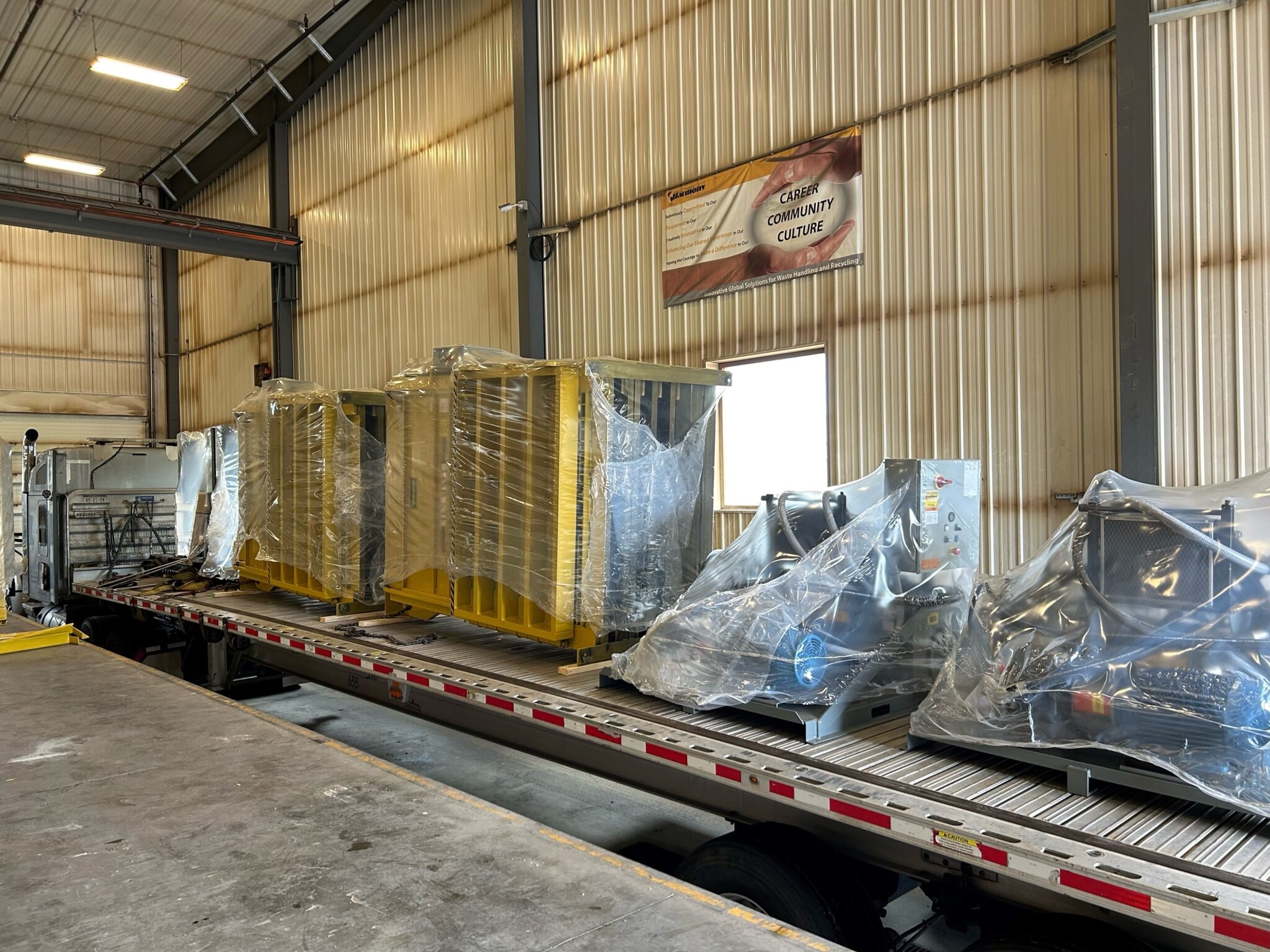
When a baler ships upright, it may require specialized trailers and additional freight coordination. These factors can significantly increase transportation cost.
Shipping on the side allows the use of standard freight equipment. This approach often leads to:
- More available carriers.
- Faster scheduling.
- Lower delivered cost for the customer.
Especially for long distance shipments, this difference can be meaningful.
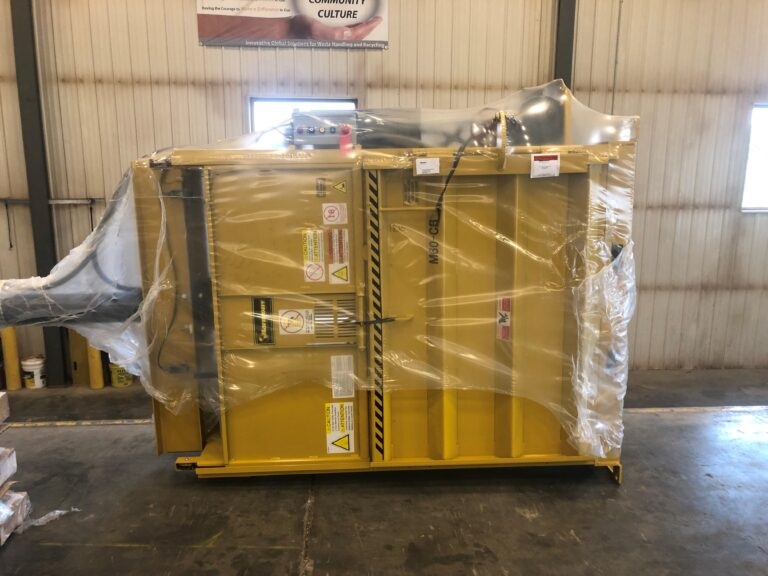
Not every facility has the same unloading capabilities. Some locations lack overhead clearance, cranes, or high capacity forklifts.
When shipped on its side, a baler:
- Has a lower center of gravity during unloading.
- Is easier to maneuver through dock doors.
- Can be tipped upright in a controlled manner once inside.
Harmony provides easy to manage lifting eyes or fork pockets on each vertical baler to assist in this process. This makes installation safer and more predictable for many sites.
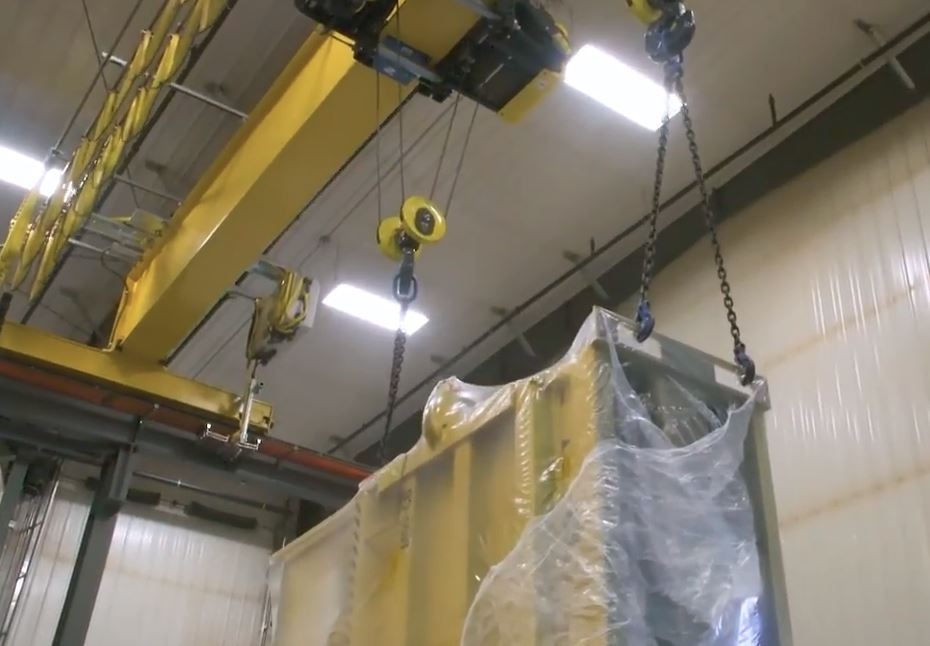
From a factory standpoint, vertical balers are often assembled and staged horizontally during production. Shipping them on their side can reduce extra handling steps before loading.
Fewer handling moves generally mean:
- Less risk of cosmetic damage
- Improved production efficiency
- Better consistency from build to shipment
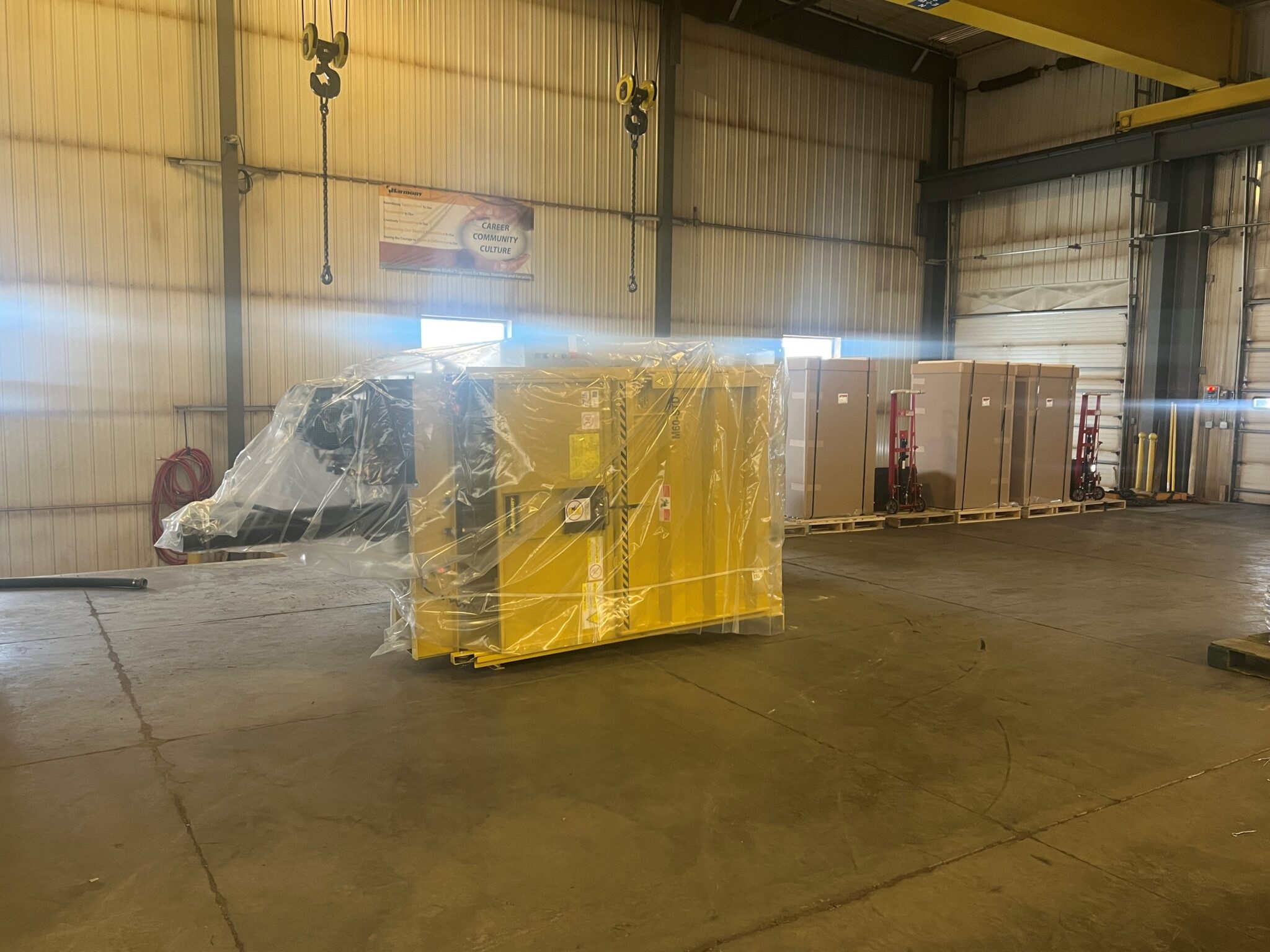
Well engineered vertical balers are designed to handle forces from more than one direction.
When shipped on their side, quality manufacturers take steps such as:
- Securing the ram and platen
- Protecting hydraulic components
- Using proper blocking and restraints
When these procedures are followed, shipping on the side does not impact machine performance or service life.
Not every baler is equally suited for side shipment. If done without proper preparation, risks can include frame stress or hydraulic issues. This is why experienced manufacturers provide clear handling instructions and installation guidance.
Vertical balers are shipped on their sides to accommodate transport regulations, reduce freight cost, and make delivery and installation safer at real world facilities.
The true difference is not whether a baler ships upright or on its side. It is how well the machine is engineered, protected, and supported throughout the process.
Harmony has decades of experience designing, manufacturing, servicing, and continually improving our long lasting line of vertical balers. If you would like to learn more about how these innovative sustainability solutions can help you save time, space, labor, and money in your business operations, call us at (507) 886-6666 or fill out this simple form today!