

- Home
- Companies
- Aquatec Group Ltd.
- Products
- AQUAscat - Model 1000S - Acoustic ...
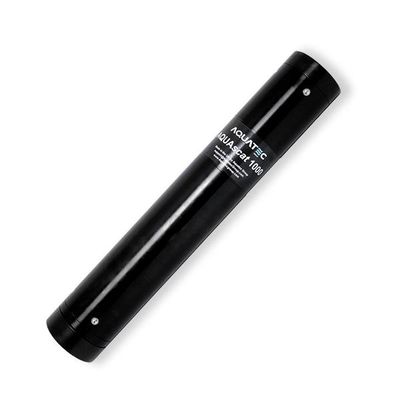
AQUAscat - Model 1000S -Acoustic Suspended Sediment Profiler Survey
The AQUAscat® 1000S represents a new generation of high frequency acoustic instrumentation. It has applications in sediment transport studies, including measurement of suspended sediment profiles, precision altimetry, dredge plumes and turbulence. The AQUAscat transmits pulses of high frequency sound on up to four transducers, each of which may operate at a different frequency. It measures the sound scattered by sediment or other suspended materials at discrete spatial intervals programmable from 2½ millimetres to 4 centimetres. For altimetry, this may span a few tens of centimetres; for monitoring sediment suspension profiles, a total range of around 1- 2 metres is typical; while dredge plume estimation may extend to 10 metres. The instrument is supplied in a subsea housing suitable for long-term unattended deployments. Batteries for various deployment schedules are available to order. Suspended sediment in the field - to 1000m. Ideal for sediment research and surveys.
- Surveys
- Sediment transport studies
Key features
- The AQUAscat 1000S can observe profiles of up to 10 m.
- Using set frequencies of 500 kHz, 1 MHz, 2 MHz and 4 MHz, the AQUAscat 1000S allows you to determine the mean grain size and concentration of suspended materials.
- The AQUAscat 1000S is a self-contained instrument with 4 integrated transducers, allowing simple deployment and operation.
- Once you have setup the burst sampling in AQUAtalk, you can be confident that the AQUAscat 1000S is operating at set intervals chosen by you.
- For long-term deployments, the AQUAscat 1000S can be connected to an external battery pack.
- The instrument has integrated temperature and depth sensors to give you a better understanding of the water environment.
- Aquatec offer an optional turbidity sensor that can be integrated with the AQUAscat 1000S. This provides a separate single point measurement of turbidity, giving optical measurements as well as acoustic. This feature is ideal for water quality monitoring, dredge monitoring and aquaculture projects.
- The AQUAscat 1000S can be used in water depths of up to 1000 m.
Effective profiling of SSC
- AQUAscat 1000 technologies can observe profiles of suspended sediment concentration over a series of depths within a water column to give you valuable knowledge on the sediment processes taking place.
- Profiles can be observed at a single location to produce a time series, or transects taken to observe spatial variability.
- Profiling can be done horizontally or vertically depending on your choice of deployment.
- Profiles of SSC can provide information on sediment processes, including motion under wave, tides and currents. Applications include research, coastal zone management and flood risk management. Profiles can provide more information on dredge plumes to assist operational decisions, habitat protection and regulatory compliance.
Multiple frequencies
- Using multiple frequencies, the AQUAscat 1000 range allows you to determine the mean grain size and concentration of suspended materials.
- The instrument is most suitable for particle sizes between 20 μm and 500 μm radius and concentrations of 0.01 g/l to 20 g/l over 1 m, or more over a shorter range.
Use in all water environments
- The AQUAscat 1000 can monitor sediment in both freshwater and marine water environments, including:
- Estuaries
- Coastal areas
- Rivers
- Lakes
- Oceans
- Polar regions
- Laboratory studies
Concerned about biofouling?
- Acoustic instruments have greater resistance to biofouling than optical instruments, therefore AQUAscat 1000 technologies are ideal for unattended deployments.
Effective data analysis with the AQUAscat Toolkit
- The acoustic backscatter data is post-processed and viewed using the AQUAscat Toolkit, which is supplied with every AQUAscat 1000 instrument.
- View the Acoustic BackScatter (ABS) data in different formats and apply bottom-detection and threshold algorithms to the data before it is processed to obtain suspended sediment concentration (SSC) profiles.