

- Home
- Companies
- Florida BioProcessing
- Products
- Activated Carbon for Various Industrial ...
Activated Carbon for Various Industrial Applications
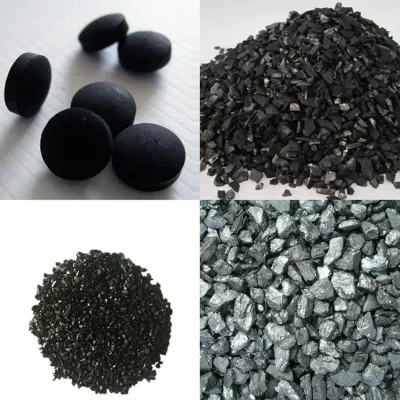
Activated carbon, also known as activated charcoal, is a highly effective adsorbent widely utilized in industrial applications. Its structure is characterized by small pores, significantly increasing its surface area, which enhances its capacity to adsorb impurities. It plays a crucial role in water purification, removing contaminants and ensuring safe drinking water. Furthermore, activated carbon is instrumental in energy storage within lithium-ion batteries, supercapacitors, and photoelectric cells, as well as in fuel storage for natural gas and hydrogen. Its industrial applications extend to electroplating, air and water filtration, and cleaning industrial gases. Environmental applications include air purification by removing toxic pollutants, facilitating spill cleanups, and ground remediation. The versatility of activated carbon is further demonstrated by its presence in numerous commercial filters and purification products, emphasizing its relevance across diverse sectors.
Activated carbon (also called activated charcoal) is an adsorbent, a substance that adsorbs another substance such as impurities in drinking water. It is processed to have small pores that increase the surface area available for adsorption or chemical reactions. It is often used to purify, dechlorinate, deodorize, and decolorize liquids and vapors. Some of its many applications include:
- Energy Storage - lithium-ion batteries, supercapacitors, and photoelectric cells
- Fuel Storage - natural gas and hydrogen storage
- Industrial Products - electroplating, air, and water filtration, and industrial gas cleaning and automotive applications
- Environmental - removes toxic pollutants from the air, purifies water, and helps in spill cleanups and ground remediation