


Florida BioProcessing products
Activated Carbon for Various Industrial Applications
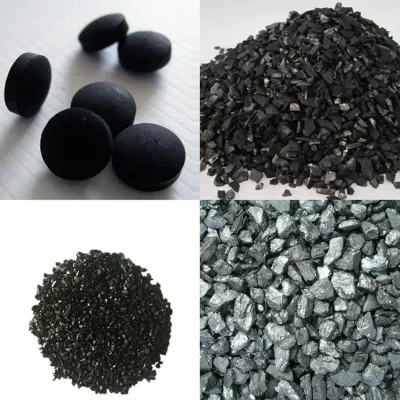
Activated carbon, also known as activated charcoal, is a highly effective adsorbent widely utilized in industrial applications. Its structure is characterized by small pores, significantly increasing its surface area, which enhances its capacity to adsorb impurities. It plays a crucial role in water purification, removing contaminants and ensuring safe drinking water. Furthermore, activated carbon is instrumental in energy storage within lithium-ion batteries, supercapacitors, and photoelectric cells, as well as in fuel storage for natural gas and hydrogen. Its industrial applications extend to electroplating, air and water filtration, and cleaning industrial gases. Environmental applications include air purification by removing toxic pollutants, facilitating spill cleanups, and ground remediation. The versatility of activated carbon is further demonstrated by its presence in numerous commercial filters and purification products, emphasizing its relevance across diverse sectors.
Biocoal of Carbon-Neutral Biofuel
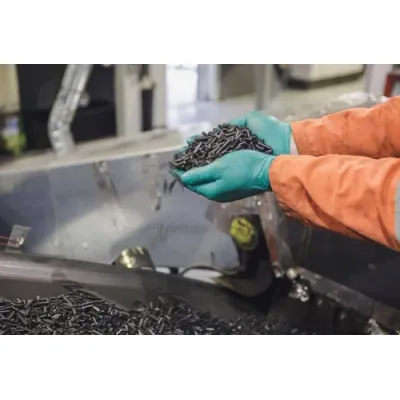
Biocoal is an innovative biofuel known for its carbon-neutral properties, derived from organic waste through processes such as torrefaction and pyrolysis. These methods involve the thermochemical treatment and high-temperature decomposition of biomass, respectively. Biocoal serves as a sustainable alternative to traditional fossil fuels like coal and wood pellets, which are commonly used in coal-fired plants and industrial heating. It offers advantages such as reducing carbon emissions and enhancing the cleaner use of biomass. Biocoal is significantly more energy-efficient, with thermal efficiency rates three times higher than bagasse, delivering around 9,000 BTU compared to the latter's 3,000 BTU. Its applications are wide-ranging, from industrial energy production to district heating, providing reliable and predictable energy more consistently than solar or wind. Additionally, biocoal supports sustainability efforts by minimizing harmful emissions, reducing forest fire risks, and lowering ash disposal concerns, all while utilizing renewable biomass.