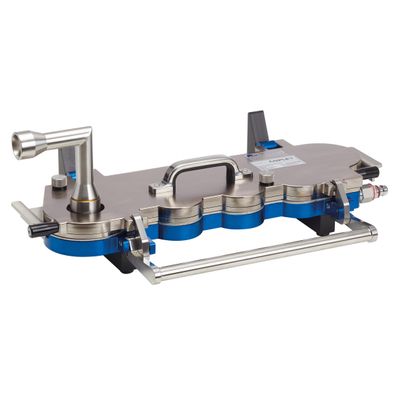
Together with delivered dose, aerodynamic particle size distribution (APSD) is typically identified as a Critical Quality Attribute (CQA) for orally inhaled and nasal drug products (OINDPs) making it a primary focus for in vitro characterisation. The APSD of an OINDP defines how particles behave in a moving air stream. It is intuitively relevant to the understanding of likely lung deposition and hence potential drug efficacy. Typically particles should be in the range of 1 to 5 microns to be effective, any larger than 5 microns and they are likely to impact the oropharynx and be swallowed, any smaller than 1 micron and it is possible that the particles will remain entrained in the air system.
View Our Inhaler Testing Brochure at: copleyscientific.com/resources/downloads/