


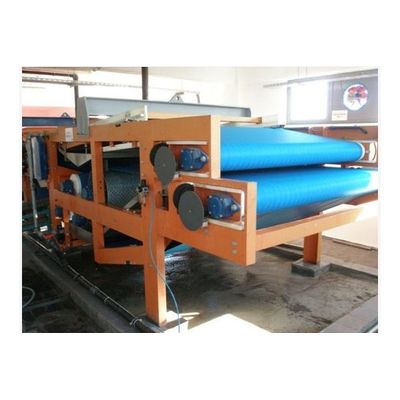
AES - Belt Presses
Belt presses are presented as the best solution for sludge dewatering processes with continuous and high flow rates required systems. Low initial investment compared to other dewatering equipment costs and low operating costs of belt presses is emerging as advantageous. AESP series of belt presses are produced in four different sizes for the sludge dewatering problems to provide the most economical solution to the problem.
AESP Belt Presses can be used for different sludge types.
- Biological and Chemical Sludge
- Integrated meat wastewater plant
- Paper Industry
- Fruit Processing Plants
- Poultry Industry
- Leather industry
- Mining industry in the ore enrichment process
- Food Industry
- Glass industry
- Corn processing industry
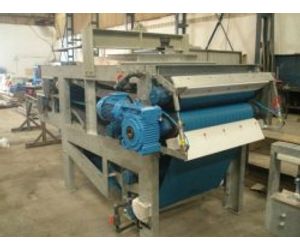
- Lowering of transportation costs due to the cake volume decreasing
- Savings in sludge dewatering area needs in company
- Do not need an operator during continuous study
- Low investment, operating and maintenance costs
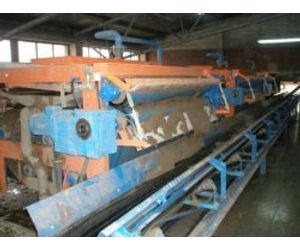
This stages are first dewatering stage, adjusting the cake thickness stage, low pressure dewatering stage and high pressure dewatering stage. First dewatering stage has great importance in dewatering efficiency.
In this step, sludge that can not be spread homogeneously will affect the output dryness value of belt filter pres and capacity values. In this section, hot dip galvanized steel protected entry mechanism with plastic metarial consisting which will not harm the belt press is available in order to increased grain sized structure of sludge that water can leave easily as a result of conditioning process diffuse homogeneously on a belt of belt press, If the flocculation process of sludge has been completed at a desired level, the sludge leaves very serious part of its water in the first dewatering section. With this fact, the first dewatering part of AESP beltpresses has been designed with large capacity.

Usually, the pressure applied to the sludge depends on belt tension and drum diameters. Drums with large diameters ensure the application of long period of low pressure to the sludge. In contrast, for drums with small diameters, in a short time high pressure is applied. Placement of the drum and the belt winding drum angles is extremely important in terms of the process. Pre-dewatered soft sludge is not able to withstand high pressures directly.
Therefore, AESP series of belt presses high-pressure levels started with the large-scale drums.
In this stage with the two perforated drums, sludge is applied to long-term low pressure.

Sludge that pass from perforated drums is now ready to apply great pressure. AESP and belt presses in series, drum diameters get smaller to the output in a specific order, pressure is increased relatively. We would like to draw your attention to the fact that many belt presses as precedents, this feature is not offered and drum diameter is almost the same. This subtle difference is crucial.

While sludge that was brought to uniform thickness in cake thickness adjustment step is passing through the low pressure and clamping level drums, it is fragmented in different platforms and with high-pressure and in clamping levels squeezed with increased pressure the desired solids in the cake are obtained.

Filtrate that obtained at each stage of AESP belt presses, are collected by separate collection pans, and removed through PVC piping. Filtered water from dewatering operations is discharge to drainage channels.
AESP series of belt presses, drum used at the following number.
- I. Cake thickness adjustment rollers: 8units
- II. Perforated drums: 2 units
- III. Pressure drums: 2 units
- IV. Tension drums: 2 units
- V. Belt alignment rollers: 2 units
- VI. Drive Rollers: 2 units
- VII. Return Drums: 2 units
Total: 20 units