


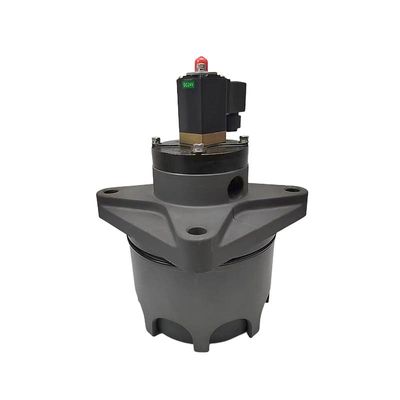
Optipow - Model 135 - V1614717-0100 -Air Cleaning Valve
The compact pulse valve for the Optipulse fabric filters of different types is a result of many years of experiences within the fabric filter technology area. is quick acting with high efficiency has small dimensions, the figure after the name stands fir the diameter of the plunger is primarily designed to be used in combination with circular pressure tank is easy to install and make service to has a very robust design, designed for normal use at air pressure up to 600kPa (6bar). Normal max operating temperature (compact pulse valve) 50°C.
- Construction: Diaphragm Plunger Pulse Jet Valve
- Standard: Alstom Optipow Fabric Bag Collector
- Operating Temperature : Low Temperature Resistant Design, -40°C-130°C
- Application: industrial dust removal in thermal power plants, glass plants, cement plants, mining, industrial metallurgy, production workshops, etc
- Advantage: 30 Years Experience Factory, Strict Quality Control System, Longer Service Life, Attractive Price, Original Accessories Available
- Package: Special Foam Box
- Production Capacity: 100000PCS/Month
- Longer Service Life: More than Twice Service Life than that in the Same Industry
- Interchange: Alstom Pulse Jet Valve, Optipow Fabrice Filter
- Assurance: One Year Free Quality Assurance Service
- Service: 7*24 Hours Expert Consultation Online, Replacement Instead of Repair
Volume A connected to the pressure tank, via the slot between the valve house and the plunger. There is same pressure in the volume A as in the pressure tank.
Due to the larger pressurised surface of the plunger in volume A, the plunger is pressed towards the pulse pipe and seals between the pressure tank and the pulse pipe.
The volume B is via the solenoid valve connected to the pilot air. The area is larger on pilot air side so the pilot membrane is pressed down towards the top of the valve house and seals off the volume A from the ambient.
When cleaning is initiated, the solenoid valve closes the connection (a) and opens to ambient (b) which means that volume B is evacuated.
The membrane is pressed upward (c) and the volume A is evacuated through the 2 ports at the outer side of the valve house.
The plunger is rapidly moving upwards by the pressure difference over the plunger.
The compressed air in the pressure tank is released through the pulse pipe as a pulse and further on to a row of filter bags.
The solenoid is closed to ambient and opened to the pilot air.
The pilot membrane is pressed down towards the seat.
The pressure above the plunger will be equalised to the tank pressure via the slot between the plunger and the horse and the plunger moves down to the pulse pipe and ends the cleaning pulse.
The time for a sequence (start opening to closed valve) is depending on process demands, i.e Volumeof pulse air per pulse and emission guarantees.
Assembly instruction
NOTE!
Before the assembly of the OPTIPOW units, an accurate cleaning of the internal of the pressure tank is of great importance. Any particle in the tank could in the future give serious problems regarding the operation of the pulse valves.
The OPTIPOW valve is as standard made for vertical installation. When the valve shall operate horizontally an extra internal spring has to be used. By that the plunger will always be in closed position when pressurising the cleaning system.
The OPTIPOW is normally delivered as one unit in a special package. For detailed instructions regarding erection of separate parts, see OPTIPOW assembly drawing.
- Unpack the valves at first when mounting them.
- Check that there are no visible damages on the valve.
- Check that there are no foreign materials inside of the valve.
- Check that the top of the pulse pipe is smooth without any burrs.
Position numbers below refers those mentioned in figure 1.
Put the plunger (pos 4) on the top of the pulse pipe. Lubricate the O-ring on the outer side of the valve house (pos 1) and match the house to the plunger. When installing the pulse valve be careful not to damage the O-ring. Tum the house so that the solenoid is pointing in right direction. Screw the four bolts with fingers as long as possible and make then the last setting with tool cross-wise to avoid damages to the O-ring. Torque according to specifications.
NOTE!
The valve house is sensitive to strikes on the bottom part of the house(see sketch below).
If the house is sutyected to a strike and the plunger is not able to move up and down inside the house, you may use a hammer or a conical tool to restore the shape of the taps of the housing, thus letting the plunger move freely up and down.