


- Home
- Companies
- HH Engineering & Service GmbH
- Products
- H-H-Engineering - Ammonia Injection ...
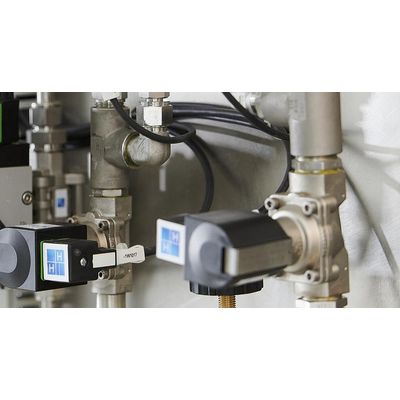
H-H-Engineering - Ammonia Injection System
The ammonia (NH3) necessary for selective catalytic reduction can be injected into the exhaust gas stream in a variety of ways. The most common way is the transformation and injection of urea solutions. Depending on the plant, ammonia can also be injected directly. The injection itself can also take place in different forms.
If ammonia is injected directly, it must be available on site in gas bottles. This method can be used especially for low ammonia requirements, if the storage and installation of gas cylinders is not a problem. For this purpose, a dosing unit is installed which monitors and controls the pressure and flow of the system.
If larger quantities of ammonia are required for the reduction of NOx, it can be added as ammonia water. After dosing, ammonia can evaporate very quickly from the solution. However, high safety requirements are necessary when using ammonia water, as ammonia can evaporate during storage and form explosive and toxic mixtures. The other possibility is the use of urea solutions. The urea solution can be dried by the hot exhaust gas and urea can then be melted. Water and ammonia are formed in the process. This method allows ammonia to be stored in urea, so to speak, even in large quantities. Only the conversion of the urea into ammonia must be guaranteed by a sufficient evaporation length.
How is the injection technically implemented?
In principle, the urea or ammonia solutions can be injected in two ways. On the one hand directly by special injectors with
(the necessary) precise actuators, or compressed air supported by appropriate atomizers. The former technique is suitable
for low reducing agent requirements and is usually accompanied by higher urea droplet size and the resulting longer evaporation
time. With compressed air-supported injection, smaller droplet diameters can be achieved, and the evaporation is correspondingly faster, even with high ammonia requirements.