- Home
- Companies
- Williams Patent Crusher & Pulverizer ...
- Products
- Apron Pan Conveyors
Apron Pan Conveyors
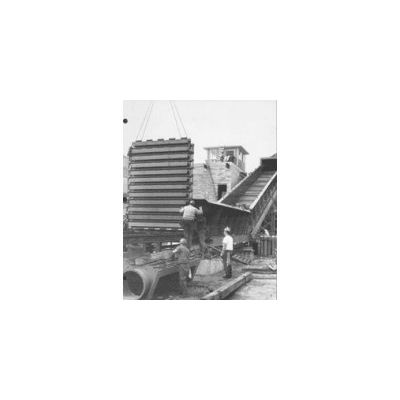
Built to match the superior strength and long service life of Williams crushers, grinders, and shredders as proved in industry`s most demanding materials handling. Williams heavy-duty apron pan conveyors withstand repeated severe impact loads over long operating lives.
Exclusive Pan Design The basic pan is 1/2" thick carbon steel plate, shaped at an inverted angle of 40û . Each pan is "braced like a bridge" by a full length 6" x 6" steel H-beam, welded to the inverse, or underside. According to size of the material handled, certain pans also carry a 3" pusher bar welded to the angle apex.
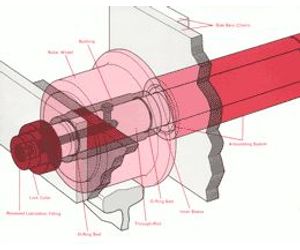
Innovative Piano-Hinge Pan Construction The basic hinge is formed by welding alternately spaced steel tubing to the pan edges. A sleeve of steel tubing is then placed inside the full length of aligned spacers. Finally, a case-hardened, steel through-rod is run through the sleeve to tie the entire assembly together, including the roller wheels, bushings, and chain.
Case-Hardened Roller Wheels & Bushings To match the wear resistance and long life of piano-hinge pan construction, the specially machined roller wheels and matched bushings are case hardened. Thorough, long lasting lubrication is assured through fittings recessed into the ends of the through-rod plus special O-ring seals in the bushings.
Heavy-Duty Side Bars (Chain) Long life also is promoted through the use of double reinforced side bars, or links, made of AISI 1040 steel, 1/2" thick. These bars also act as seals at the skirt boards to prevent leaks.
Impact Rails Under heavy impact loading, the pan assembly is free to deflect downward approximately 1/4" to 3/8". At this point, the pan-supporting H-beams contact cross-directional impact rails which prevent further deflection. This "controlled flexibility" in turn prevents any bending or deformation of the pans. Rotary disc screens are used for the consistent, high speed separation of oversized and undersized components of municipal, industrial and wood wastes. They frequently are used as feeders into shredders or hogs, bypassing pre-sized materials.