


Aquadopp - Model Z-Cell -Current Profilers
In the new Aquadopp Z-Cell*, Nortek has extended the profiling range by introducing a “Cell Zero”. This new feature is generated by an extra set of horizontal transducers. The transducers operate at a different frequency (2 MHz) and provide the 2D current velocity at the level of the instrument.
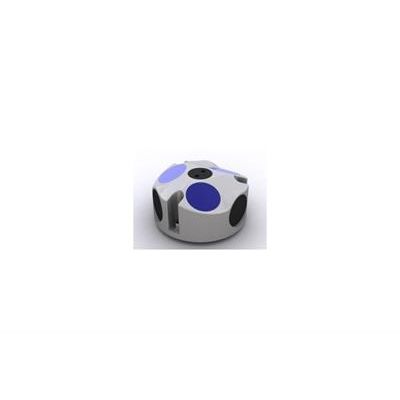
The Aquadopp Z-cell* is a hardware and firmware extension to the 1 MHz Aquadopp profiler. The instrument has the same specifications as the Aquadopp profiler but with the added benefit of a measurement cell located at the level of the instrument. The photo shows how an extra set of transducers is embedded into the 1 MHz profiler head. Because the Z-cell requires an extra set of receiver channels, the feature is not backward compatible with electronics shipped before 2010. Please note that the 1 MHz unit has three horizontal beams (at the sam azimuth as the slanted beams but slightly offset) while the 600 kHz version only has 2 horizontal beams.
The near-instrument data loss in traditional current profilers comes from the combination of mounting height, the electroacoustic blanking and the offset of the first measurement cell. In many applications this means that valuable and interesting information about the ocean current is lost. The Z-cell solves this problem by measuring the horizontal velocity at the level of the instrument.
The Aquadopp Z-cell can be mounted in the frame on the bottom or in a surface buoy. Preliminary studies show that the surface current can be quite different from what is normally observed 2-3 m below the surface. The addition of an extra cell is not merely "nice to have" but can have a profound impact on how we view and analyze currents. A paper presented at OCEANS 2009 compares the Aquadopp Z-Cell data mounted on a NOAA NDBC 3-m discuss buoy with a bottom mounted Nortek AWAC located nearby.
The hardware foundation of the Z-cell is similar to that of the "Aquadopp Profiler" - a small and easy-to-use current profiler that has become a favorite for use in estuaries and shallow coastal water. With the introduction of the new "mid-life" electronics in 2008, it has become shorter by 10 cm, the profiling range has increased, and the power consumption has come down even further.