


- Home
- Companies
- REDCO Process Environment and Energy ...
- Products
- REDCO - Model RBD Series - Belt Type ...
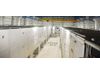
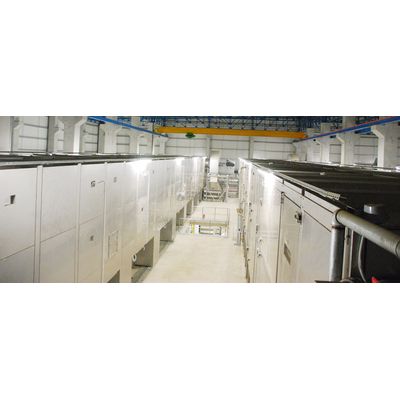
REDCO - Model RBD Series -Belt Type Sludge Dryer
REDCO RBD series belt dryer units are highly efficient sludge drying systems. The prominent advantage of the RBD series belt drying plant is its ability to produce a final product in granular form with high dryness and low emission with minimal dust, achieving this at low costs. The process involves highly dewatered sludge transformed into rod-shaped structures with an average diameter of 7-9 mm by an eccentric screw pump, which is then granularized and evenly spread on the belt. The arranged sludge enables effective air circulation for drying. The granulation unit comprises multiple nozzles and requires periodic washing or mechanical cleaning if blocked by foreign substances. Sludge on the conveyor belt moves within a tunnel where perforated belt design allows hot air to contact and dry the sludge uniformly, maintaining product integrity. The thermal energy needed for evaporation is provided by hot air, which is gradually cooled as it progresses. The highly dewatered sludge reaches approximately 85-90% dryness before falling onto a secondary belt to achieve about 90% dryness. Belt widths range from 2500 to 4000 mm, with adjustable speeds between 0.2-0.7 m/min, crafted from perforated stainless steel with PTFE or PFA coating on the top belt's contact surface. Additional product turnover systems ensure even drying, preventing adhesion and clumping. An optional water-cooled screw conveyor can be added at the dryer exit to reduce the product temperature to desired levels, making it suitable for direct transportation or pelletization. Heating and heat recovery in the drying process utilize waste heat, biogas, natural gas, electricity, or other energy sources, with a hot air generator producing the required hot air. Circulation air in a closed loop is reheated, while a portion undergoes condensation in a water/air heat exchanger, enhancing thermal efficiency and reducing waste air. Emission control ensures minimal dust and gas emissions, with online dust monitoring triggering safety mechanisms if thresholds are exceeded. The drying system operates at low temperatures, reducing odor and ensuring homogeneous drying while an aftertreatment wet scrubber system cools and filters the exhaust air to manage fine dust and odors effectively.
2. Process Description
Highly dewatered sludge is pumped to the granulation unit by means of an eccentric monopump to form a stick pasta form with an average diameter of 7-9 mm and to spread it homogeneously on the belt. The mud sticks created here are cut into certain lengths and laid on the band. In this way, the mud laid evenly on the belt ensures efficient air circulation and drying.
There are a number of nozzles in the granulation unit. The granulation unit can be washed with pressurized water when desired. Washing is required at regular intervals. If the unit is completely clogged due to foreign substances in the mud, the unit may need to be disassembled and mechanically cleaned. This process is a simple maintenance process that takes approximately 1.5 hours.
The mud laid on the belt is carried forward in the tunnel by the conveyor belt. The conveyor belt is designed as perforated and hot air comes into contact with the mud through these holes and dries the wet mud. In this type of convective drying facilities, since the sludge heats and dries very slowly in the first drying step, the product is ensured to dry without damaging its structure. The heat required for evaporation is taken from the hot air supplied into the system. For this reason, hot air begins to cool.
After the first band, the product falls on the 2nd band below. With this tape, it travels the same distance towards the reverse side, that is, towards the direction where the product is poured, to reach approximately 90% dryness. During this period, the product maintains its homogeneous structure.
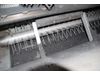
The bandwidth is 2500 or 4000 mm net. Belt speed can be adjusted between 0.2-0.7 m/minute. The band material is perforated stainless steel. The part of the upper band in contact with the mud is coated with PFA or PTFE. The perforation pattern is given below.
In addition, there are 1 or 2 product turning systems in the system to ensure more homogeneous drying of the product at points near the middle of the belt. In this way, the product is both mixed and prevented from sticking and clumping.
When necessary, a water-cooled screw conveyor can be added to the drying facility outlet to lower the resulting product below the desired temperature. The product coming out of the dryer has a structure and temperature suitable for pelletization and does not create dust. Transportation of the final product can also be achieved without pelletization.
3. Heating / Heat Recovery:
Thermal energy needed for the drying process can be provided from waste heat, biogas, natural gas, electricity or any other energy source.
In cases where biogas or natural gas is used as a thermal energy source, hot air is produced in a hot air boiler.
3.1 Hot Air Production:
Hot air is produced by a gas burner and an inferno. While some of the heated air is clean air, some of the air is supplied from the air circulating through the condensate line.
3.2 Circulation Air:
Circulation air is the air taken from the dryer in a closed cycle and reheated in the gas burner and fed back.
3.3 Condensate Unit:
Some of the internal circulation air is sucked and transferred to the condensate unit.
In the first step of the condensate system, the air is cooled to its dew point in the water/air heat exchanger. The energy gained in the water/air heat exchanger is used to reheat the returning air.
The Condensate Unit is an air purification unit integrated with a humidifier with water spray nozzles. By cooling the waste air, the air temperature is reduced and condensation is achieved.
3.4 Return Air:
The return air temperature is approximately 40°C and is divided into two streams.
Waste air is air that is expelled and can be retreated with an additional system. Clean air is as necessary for the burner as waste air.
The remaining air is called circulating air. This air is reheated in the water / air heat exchanger (with the heat obtained from the cooling cycle of the condensing unit) and sent to the direct-fired heat exchanger. Here the air is heated to higher temperature.
Heat recovery obtained with the waste air recovery system increases thermal efficiency and reduces the amount of waste air.
4. Emissions:
4.1 Dust:
Before drying, the wet sludge is passed through nozzles in the granulation unit and shaped into the appropriate pasta form. This pre-shaping prevents the formation of granules of different diameters and also helps to avoid dust formation.
Since the product is carried on a belt, it is away from dust problems such as friction, tension or centrifugation.
Since the air flow rate is very slow, it is not possible to transport dust particles by air.
In the facility, dust emission released into the air of the drying building or mixed into the flue gas is in trace amounts. The resulting small amount of dust accumulates at the bottom of the drying tunnel over time. This dust should be cleaned and removed from the environment every 1 or 2 years.
Since the amount of dust is very low, the risk of burning, ignition or ignition is extremely low.
The drying facility will be equipped with 1 online dust measuring device. This dust measuring device will trigger an alarm when the dust concentration in the drying tunnel reaches 30 mg/m3 at any operating time and the facility will stop for safety. A combustion/explosion due to dust is only possible when the dust concentration reaches values such as 50-100 g/m3. The dust sensor, which is set to a maximum value of 30 mg/m3, eliminates the possibility of events such as burning/explosion in the facility.
4.2 Gas / Odor:
Since the drying temperature is between 130-140 degrees, which is considered low temperature, the product is dried by convective heat transfer without damaging its structure. This means that the heat required for evaporation is supplied by hot air. This system provides a great advantage in terms of odor from high temperature heating with hot surface contact. In this way, the amount of waste air decreases and, accordingly, the amount of odor decreases.
In addition, since homogeneous product distribution prevents regional overheating, drying occurs to the same extent in every region.
4.3 Exhaust Air Cooling / Humidity condensation
Exhaust air cleaning is also done with the Wet Cleaning System. Exhaust air is cooled by water spraying method in the gas washing unit (Wet Scrubber). In this way, many parts of the gases condense together with the substances that create odors. In addition, fine dust particles are separated from the air during cleaning.
Gas Washing Unit water is used from the Purification Plant outlet water. All water discharged from the system is given back to the facility entrance.
This Exhaust air cleaning system guarantees the separation of fine dust particles as well as odor removal.
5. Dried Sludge:
The incoming treatment sludge is dried to between 85% and 95%. Due to this, weight and mass loss occurs. The resulting sludge has a pellet structure suitable for many disposal methods (storage, incineration, fertilizer use...). The temperature of the final product coming out of the dryer is in the range of 85-90oC, and this temperature will be reduced to 45oC by the cooling jacket screw conveyor located at the drying outlet, before being transferred to the dry product silo.
PROCESS DESCRIPTION IN PARALLEL TO THE FACILITY FLOW DIAGRAM
Mud Line
The sludge dewatered by band filter presses in the treatment plant will be transferred to the sludge silo with a monopump. The sludge cake, taken from the bottom of the sludge silo with a monopump, will be pressurized and pressed into the granulation unit at the beginning of the belt drying facility.
The sludge cake, which is turned into long thin pasta strips in the granulation unit, is laid on the 1st belt conveyor. The mud that starts to dry on the 1st band then falls on the 2nd band.
At the end of the 2nd belt, the mud that has reached the desired dryness is transferred to the dry mud conveyor. The dry product is transferred to the dry product silo via this conveyor.
The product kept in the dry product silo will be transported to the final disposal point by trucks once the silo is filled.
Hot Air Line
Some of the hot air used in the system is constantly circulated. Therefore, while some air is absorbed from the atmosphere as clean air, the same amount of air is discharged from the system as flue gas.
Hot air will be produced by a directly heated air boiler. The main hot air flow, whose temperature reaches 280 oC at the exit of the air boiler, is given directly under the drying tunnel and is distributed uniformly throughout the length and width of the entire drying tunnel through an internal channel system.
The hot air supplied to the drying tunnel is circulated within the drying tunnel approximately 4 times per hour, ensuring that the air is saturated with moisture and the water in the sludge evaporates and passes into the air phase.
Air saturated with moisture is drawn through the drying tunnel by the flue gas fan. This air flow, which contains moisture, will enter a condensation unit that works on the wet washing principle to both remove the moisture and wash the possible dust pollutants inside. In this unit, the air washed with clean water is transmitted to the hot air boiler to be reheated later.