



Bertin Nuclear - Model DARS -The Control System for the Calibration Laboratory
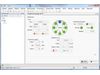
The Control System for Calibration Laboratories is an integrated software‑and‑hardware solution designed to manage, automate, and streamline the full range of operations in ionizing radiation calibration facilities. It provides a unified environment for controlling laboratory equipment, processing measurement data, and ensuring consistent, traceable calibration workflows in compliance with international standards.The Control System for Calibration Laboratories is engineered to support the complete workflow of labs specializing in the calibration of radiation‑measuring instruments. It includes dedicated application software paired with hardware modules that manage instrument control, data acquisition, and safety interlocks.
The system is offered in three configurations—CALCONTROL, DARS EASY, and DARS PROFESSIONAL—each tailored to different levels of automation and operational complexity. The advanced DARS configurations offer high degrees of automated control, ensuring:
- Repeatable and standardized calibration procedures
- Reduced human error
- Optimized laboratory productivity
- High‑quality, traceable calibration results
Through centralized data management and automated procedures, the system delivers a dependable and efficient calibration workflow suitable for primary and secondary dosimetric laboratories.
- Complete operational management for laboratories performing ionizing radiation instrument calibration
- Unified control platform compatible with gamma, neutron, and X‑ray irradiators, as well as dosimeter calibrators, surface contamination sources, and specialized irradiation systems
- Fully aligned with EN ISO/IEC 17025 requirements, supporting accreditation and regulatory compliance
- Automated tracking of radiation source parameters, including decay correction based on half‑life data
- Automated calibration routines that increase throughput, minimize operator error, and improve consistency
- Centralized database storing all calibration records, measurement data, and operational parameters
- Digital communication interfaces allowing direct acquisition of measurement values from calibrated instruments