


- Home
- Companies
- Bertin Technologies
- Products
- Bertin Nuclear - Model GI-01L - Gamma ...
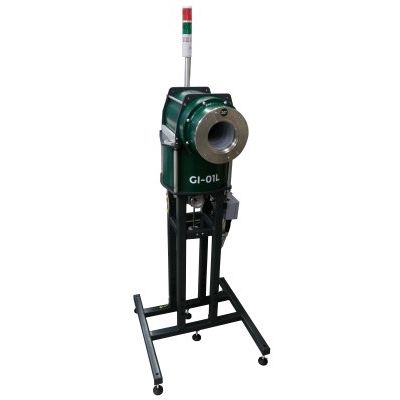
Bertin Nuclear - Model GI-01L -Gamma Irradiator
The Gamma Irradiator is a precision metrology instrument designed to generate a homogeneous, collimated gamma beam using a single Cs‑137 radionuclide source. It is ideally suited for nuclear facilities, radiation metrology laboratories, and calibration centers requiring a stable, traceable gamma reference field.Most popular related searches
gamma dose rate
automation control system
gamma dose
calibration laboratory
precision metrology
metrology instrument
safety system
gamma dose rate monitoring
laboratory calibration
gamma calibration
The GI‑01L Gamma Irradiator is engineered to provide a stable collimated gamma beam for calibrating gamma dose‑rate and dose‑measuring instruments. When equipped with a suitable Cs‑137 source, it can deliver dose‑rate levels ranging from a few tenths of µGy/h up to several Gy/h, making it appropriate for both low‑dose and high‑dose calibration tasks.
Typical applications include:
- Calibration of personal dosimeters
- Verification of survey and area monitors
- Testing of environmental gamma sensors
- Radiation metrology and research activities
Its robust shielding, straightforward mechanical design, and automated control system ensure safe, reproducible operation throughout each exposure cycle. The fixed‑orientation source lifting mechanism further increases operational stability and long‑term performance.
- Designed for one sealed Cs‑137 gamma source, ensuring a simple and reliable configuration
- Produces a uniform, collimated gamma beam with dose‑rate capabilities extending up to several Gy/h
- Low external dose rate thanks to optimized shielding and internal geometry
- Fully automated irradiation process for repeatable, controlled, and safe operation
- Integrated safety systems compliant with radiological protection standards
- ISO 4037:2019‑compliant collimator, guaranteeing reference fields that meet international requirements
- Source remains fixed during vertical transport, enhancing mechanical safety and long‑term reliability