


Plastic Omnium
- Home
- Companies
- Plastic Omnium
- Products
- Blow Molded Fuel Systems
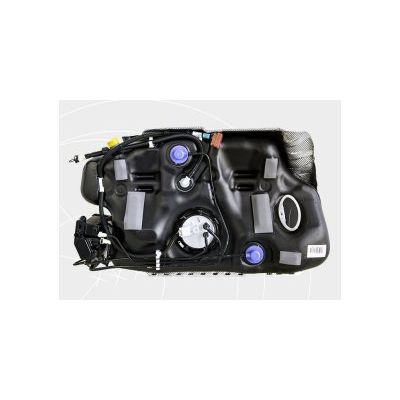
Blow Molded Fuel Systems
FromPlastic Omnium
Blow-molded based plastic fuel system technology offers the perfect balance between safety, weight and cost for automotive fuel applications. The use of plastics for fuel systems allows for:
Most popular related searches
plastic tank
life cycle assessment
plastic-to-fuel
plastic processing
noise insulation
flexible tank
fire training system
fire training
polyethylene tank
noise control
- Weight reduction, thus better fuel economy and lower CO2 emissions: an average plastic tank weighs one-third less than an average steel tank.
- Tank durability and biofuels compatibility: plastic fuel tanks made of high-density polyethylene (HDPE) are corrosion-resistant without any need of special coatings, making it also compatible with all kinds of bio-fuels. In addition, HDPE can help dissipate electrostatic charge and prevent igniting fuel. Also, several studies demonstrated the superiority of plastics in terms of Life Cycle Assessment.
- Design freedom allowing space economy: Thanks to the flexibility of this material, fuel tank systems made of plastics can be designed to fit the exact given space on the car chassis, thus increasing fuel storage capacity.
- Noise attenuation: insulating properties of plastics allow to reduce fuel system related noises and offer innovative and efficient solutions to control the fuel behavior and soften the slosh impact.
- Low permeability: thanks to advanced composite structures and functional component integration allowed by plastics, combined with efficient process innovations.
- Crash worthiness: through high impact performance.
- Fire resistance.
- Suitability for hybrid power trains: plastic fuel tank systems are fully compatible with hybrid power trains and only a few minor adjustments on fuel system components are required. Enabling high design freedom and integration feasibility, plastic fuel tank systems require only minor component adjustments to be fully compatible with hybrid powertrains.
- Cost effectiveness achieved through the combination of great design and manufacturing flexibility for complex shapes, mechanical and chemical resistance, and quantity of material to be used. Besides, plastics can be processed at lower temperatures than steel or glass.