

Boralit - Mud Traps
A mud trap removes sediments (sand, mud, grit, settable solids,…) from the wastewater. The installation of a sediment collector may be necessary in the following circumstances and may be used together with a hydrocarbon and / or grease trap separator: In garages, car-washes, car parks,... These are places where there is always a chance that hydrocarbons might be discharged. In hotels, restaurants, bars, schools, butchers, caterers,.. These are places where there is always a change that vegetable or animal fats might be discharged along with other sediment. When there is a chance that sediments might enter an intallation, causing blockage. A mud trap or grease trap can be obligatory, please consult your national and / or local legislation and environmental regulations.
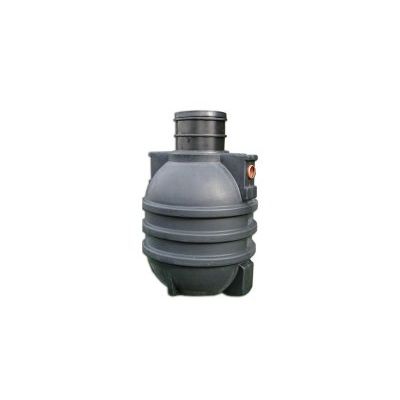
The water loaded with sediment enters the tank by means of an anti-splash jet-nozzle. Because the sediment has a higher density (it is heavier) than the water in the tank, it starts to settle down. The water that flows out of the separator is nearly sediment-free.
The minimum volume of the mud trap:
In combination with a hydrocarbon separator:
- class 1 (slightly polluted water): 100 x the flow of the separator, e.g. brand dealer.
- class 2 (polluted water): 200 x the flow of the separator, e.g. car washes.
- class 3 (heavily polluted water): 300 x the flow of the separator, e.g. cleaning of farming.
In combination with a grease trap:
40 litres per second of the grease trap, e.g. grease trap 10 l/s, mud trap = 400 litre.