


- Home
- Companies
- Hunan New Frontier Technology Co., Ltd.
- Products
- Frontier - Boron-Doped Diamond (BDD) ...
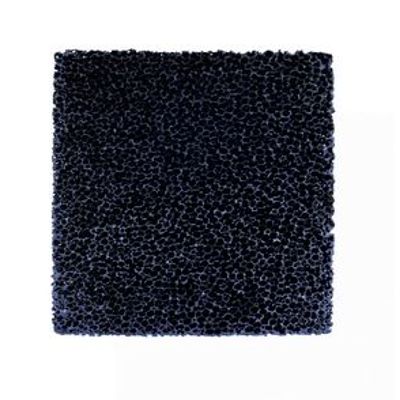
Frontier - Boron-Doped Diamond (BDD) Electrode Material
Through innovative breakthroughs in boron-doped diamond (BDD) thin-film technology and solutions to traditional technical challenges, we`ve developed a new generation of high-performance BDD electrode materials available in multiple specifications. This achievement results from our rigorous manufacturing process featuring precise pretreatment, controlled plating parameters, and optimized post-plating treatments.
Strict quality control:
BDD electrode chemical vapor deposition pretreatment and post-plating treatment are professional and strict;
Multiple choices:
Mass production of diamond electrode materials with multiple categories and specifications;
High guarantee:
The consistency and stability of grain size, coating thickness, bonding force, uniformity, and electrochemical active area are guaranteed;
Breakthrough:
Large area, high uniformity, high electrochemical active area, high electrochemical oxidation performance, high oxygen evolution potential, high conductivity, and high specific surface area.
- Substrate: monocrystalline silicon/polysilicon/niobium/tantalum/foam metal/foam ceramic: Conductivity: >100 s·cm-1
- Electrode shape: rectangular/mesh/foam/customized: Oxygen evolution potential: 2.0V~2.75V
- Coated surface: single/double sides: Hydrogen evolution potential: -2.0V~-1.0V
- Electrocatalytic reaction rate constant:10-4~10-3cm·s-1: Charge transfer impedance: <50Ω
- Grain size: <2μm: Film thickness: 10-20μm
- Boron-doped concentration: 1019 cm-3: Electrode size: 5*5~500*500mm
Industrial wastewater treatment:
BDD electrodes deliver superior performance in electrolysis and electrochemical synthesis applications. Their combination of broad potential window and minimal background current ensures stable operation across diverse electrolyte environments. Furthermore, the electrodes` exceptional chemical stability and corrosion resistance make them ideal for catalyzing numerous chemical reactions with consistent results.
Electrolysis and electrochemical synthesis:
BDD electrode materials also have important applications in electrolysis and electrochemical synthesis. Its wide potential window and low background current enable it to operate stably during electrolysis, making it suitable for various electrolyte environments. In addition, the chemical stability and corrosion resistance of BDD electrodes make them excellent in electrochemical synthesis and suitable for catalyzing various chemical reactions.
Detectors and sensors:
BDD electrode materials are also widely used in detectors and sensors based on electrochemical principles. Its excellent electrochemical performance enables BDD electrodes to provide stable and accurate detection signals in electrochemical sensors, making them suitable for various environmental monitoring and industrial control systems.