
- Home
- Equipment
Refine by
Cte Environmental Equipment & Supplies
5 equipment items found
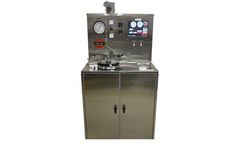
Manufactured by:Cement Test Equipment based inTulsa, OKLAHOMA (USA)
The CTE pressurized consistometer models 40-600 is specifically designed to measure cement slurries in compliance with ISO-10426, API Spec 10A and API RP-10B schedules. In addition, the units can be used to prepare slurries for the measurement of free water content, viscosity, fluid loss, and rheological properties. Wide pressure and temperature operating ranges – up to 40,000 psi (275 MPa) ...
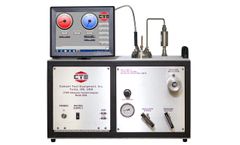
Manufactured by:Cement Test Equipment based inTulsa, OKLAHOMA (USA)
The M2000 UCA (Ultrasonic Cement Analyzer) is used to provide an indication of the relative strength development of a slurry sample while it being cured under downhole temperature and pressure conditions. The instrument is designed to perform testing in accordance with API Recommended Practice 10B-2/ISO 10426-2. The M2000 UCA is able to test cement slurries at temperatures up to ...
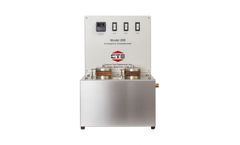
Manufactured by:Cement Test Equipment based inTulsa, OKLAHOMA (USA)
Thickening time tests are designed to determine the length of time a cement slurry remains in a pumpable, fluid state under simulated wellbore conditions of temperature and pressure. The test slurry is evaluated in a pressurized consistometer, which measures the consistency of the test slurry contained in a stationary cup while under simulated well bore conditions. This portable, rotating paddle ...
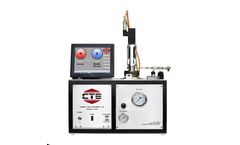
Manufactured by:Cement Test Equipment based inTulsa, OKLAHOMA (USA)
The Model 15-400 RP Pressurized Consistometer is able to test cement slurries at temperatures up to 400°F/204°C and pressures as high as 15,000 psig/103 MPa. Designed to perform thickening time tests in accordance with API specification 10B-2/ISO 10426-2. The consistometer slurry cup assembly uses a rotating paddle and a stationary cylindrical slurry cup assembly. A solid heating/ cooling ...
Manufactured by:Cement Test Equipment based inTulsa, OKLAHOMA (USA)
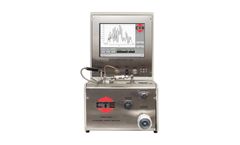
The UCA (Ultrasonic Cement Analyzer) is used to provide an indication of the relative strength development of a slurry sample while it is being cured under downhole temperature and pressure conditions. Relative strength is determined by measuring the change in velocity of an ultrasonic signal transmitted through the cement slurry specimen as it cures. As the strength of the cement specimen ...