


Raptor Tank Cleaning Systems
  1. Companies
  2. Raptor Tank Cleaning Systems
  3. Products
  4. Raptor - Model M -7 - Bristol Tank ...
RaptorModel M -7 -Bristol Tank Cleaning System

SHARE

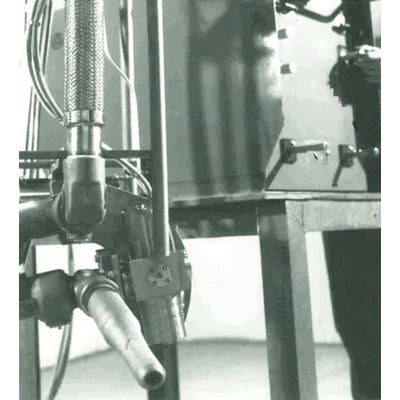
The Bristol M-7 Cleaner uses a high-pressure stream of water, slurry or other solvent to automatically clean tanks, reservoirs, or similar difficult to reach areas. On command from the program control, the nozzle directs a concentrated jet stream in a pre-set pattern to cut, dissolve and flush deposits out of the tank discharge or drain port. It handles up to 250 gallons per minute at pressures up to 250 p.s.i., removing gypsum, clay, calcium carbonate, acid crystal, or similar precipitates without disturbing the tank or its lining. In addition, the M-7 Cleaner can help you recover valuable acids, fats, oils or other materials left in tanks. Empty weights of transport cars can be reduced, saving on return charges.
Most popular related searches

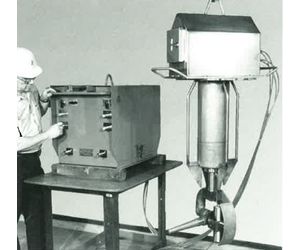
With a light hoist, one man can easily position the nozzle assembly onto a car manway or other tank opening. The nozzle position is always indicated on the program control. Thus, the operator knows where the nozzle is pointing at all times and can avoid the hazard of looking into the tank interior. Manual valves also allow him to do quick remote spotting of nozzle position in order to blast open a drain or move to the starting point.

The standard M-7 System includes a nozzle assembly, mechanically programmed control and connecting hoses. As a protection against corrosive atmospheres and solvents, all wetted metal parts are made of 300 series stainless steel.

Compressed air is used as the power source for improved safety, converted to hydraulic force to drive the nozzle in a controlled sweeping pattern across the length and width of the tank. Speed and distance of nozzle movement are regulated by a hydraulic master-slave circuit that allows independent adjustment of arc travel and speed in each axis. An interchangeable cam automatically adjusts the longitudinal speed to provide effective cleaning time at longer stream distances. Thus, the jet cleaning force can be directed where needed and for the exact length of time that produces the most efficient cleaning.