


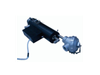
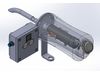
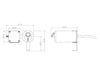
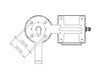
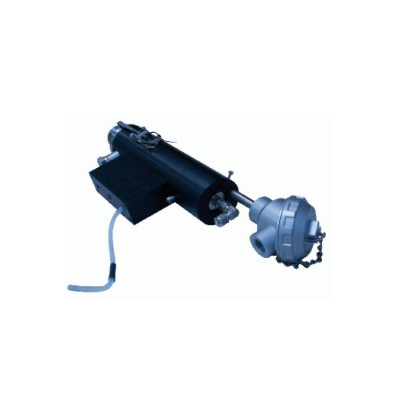
Instrumatic OXYDAN - Model DP7900 -CEMS Gas Dilution Probe System
The extractive dilution technique is the most widely used method for continuous emission monitoring of SO2 / CO2 in the USA.
- The dilution probe system uses dry contamination-free air ("dilution air") and an ejector pump to extract and diluted flue gas sample from the exhaust stack or duct.
- It is not necessary to remove the moisture from the flue gas sample Prior to analysis by the analyzers, because the sample is diluted sufficiently to avoid condensation problems during analysis at normal ambient temperatures.
- Dilution probe systems provide wet-base concentrations that work very well with flue gas flow rate monitor which also provides wet basis stack flow rate values, therefore no moisture analyzers are required for data correction.
Instrumatic is a world leader in design and manufacture of exhaust gas dilution probe systems.
Instrumatic has more than 40 years of experience in dilution sampling.
Applications:
- Marine EU-MRV/ETS GHG "Direct Monitoring"
- Marine Scrubber SO2/CO2 CEMS
- Power Plants
- Waste insinuators
- Mineral wool plant
- others
The technique is based on extracting a small sample from the stack, removing particulates by a proprietary filter and then accurately diluting the sample with clean, dry zero air; thus reducing the dew point in order to prevent condensation of water vapor and acid mist in the sample lines. The diluted sample is then sent down unheated umbilical lines to the base of the stack where it is analyzed by high precision gas analyzers. Due to the high sensitivity of these analyzers, dilution does not influence measurement accuracy. In fact, accuracy is improved over other systems since water vapor cannot condense and remove compounds such as SO2 & NO2.
Calibration of the system is achieved effectively by sending span or zero gas directly to the stack and directly into the centre of the probe filter. This effectively displaces the stack gas, so that the entire system samples the calibration gas. This scheme provides a true calibration of the full system under working conditions. Because excess calibration gas is vented to the stack, even stack pressure effects are tested. This method of calibration eliminates the need to know the dilution ratio as the analyzers are adjusted to read the span gas concentration directly.
- Unheated Sample Lines: One of the many benefits of this dilution technique is to lower the dew point of the sample gas to below ambient temperature enabling it to be transported by an unheated umbilical cord to the analyzers located at the base of the stack. The use of unheated sample lines eliminates the costly maintenance associated with heated sample lines such as failures in the line heating system and cold spots, which cause condensation and even line plugging.Reduced Maintenance: A non-dilution extractive method requires large amount of sample gas, typically 2-5 litres per minute, this sample gas requires filtering and the removal of moisture from it before it can be measured by the analyzers. However, the dilution extractive method requires only a small amount of sample gas, around 100 - 300 cc/min. This increases the lifetime of the filter in the probe and eliminates the need for using a chiller to remove moisture; thus further decreasing the level of maintenance required. Dilution of acidic stack gases substantially reduces the risk of damage to accurate analyzers.
- Sample Gases aren`t lost: The straight extractive method requires that a water removal system be used prior to the sample reaching the analyzers. This process of removing water also removes part of the very water-soluble sample gases, thus introducing an error into the measurement of SO2, NO2.
- Direct "Wet Basis" Measurement: The removal of water from the sample gas (extractive systems) alters the ratio of gases in the sample and this requires that sample temperature and a % moisture curve for saturated conditions in order to determine moisture contents of the stack gas and correct the reading of this loss of water.However, by using the extractive dilution method moisture is not removed from the sample and therefore the measurement can be classified as a "wet basis" measurement without further corrections being required.
- Calibration gases last longer: An extractive dilution system only requires 100-300 cc/min of sample gas as opposed to the 2-5 litres required by extractive systems. Therefore, only 200-400 cc/min of calibration gas is required for a full calibration. Typically with daily calibrations a 10L cylinder will last for up to two years.
Use standard ambient air and GHG analyzers or sensors
System integrator and user to select own preferences
Multiple sampling points
PLC controlled multiple sampling points with fast response time on a single set of analyzers.
Minimum Maintenance
The systems contain a zero velocity filter and has a positive pressure in the sample line, with the result that "leaks is not a problem".
Dilution probe sampling systems do not require electrical sample pumps, heated sample lines or numerous flow control valves as required by non-dilution sampling systems – therefore, this is another area of lower maintenance cost.
- Industry can use very reliable ambient level analyzers, which are very robust and generally require less routine maintenance than source level analyzers.
- Using very clean dilution air virtually eliminates analyzer internal corrosion.
Minimum connections and easy installation
Only needs connection of instrument air, and power.
OXYDAN DP7900 Sample probe more than 30 years track of record
Made out of non-corrosive materials and heated zero velocity filter technique allows use on high dust and very wet scrubber applications.