

- Home
- Companies
- Tri-Mer Air Pollution Control Systems
- Products
- Tri-Mer - Ceramic Filter for NOx ...

Tri-Mer - Ceramic Filter for NOx Reduction
To remove NOx, catalytic ceramic filter elements are manufactured with nano-bits of SCR (Selective Catalytic Reduction) catalyst embedded in the walls, about 3/4 inch (20 mm) thick. These filters achieve NOx removal with over 90% efficiency.
Selective Catalytic Reduction (SCR) is the process of NOx reduction, or DeNOx, that occurs when a NOx source is mixed with ammonia (or other agent) and allowed to react at the surface of a catalyst. Selection of an appropriate technique will depend on the type of facility (boilers, gas turbines, incinerators), site-specific conditions, and regulatory considerations.
The liquid urea or ammonia is injected upstream of the filters and turns into gas, mixes with the NOx gas, allowing the mixture to react at the catalyst. The result is conversion to nitrogen gas N2 and water vapor H2O, both harmless constituents of the atmosphere. While the process uses aqueous ammonia, there is no wet residue or by-product. All the reactants leave the system as gases.
- Dry removal with the unique ceramic catalyst filters for gas temperatures greater than 350°F. This technology features DeNOx at temperatures lower than conventional SCR while also capturing particulate, and offers the option of removing acid gases, mercury, and dioxins.
- Conventional stand-alone SCR equipment for low temperature NOx reduction that operates at roughly 300°F – 750°F.
- High temperature DeNOx that operates in the range of 600°F to 1100°F to achieve high levels of effectiveness while consuming reasonable quantities of catalyst material.
- A non-SCR process, wet scrubbing with the Tri-NOx NOx scrubber, for applications under 350°F with special requirements.
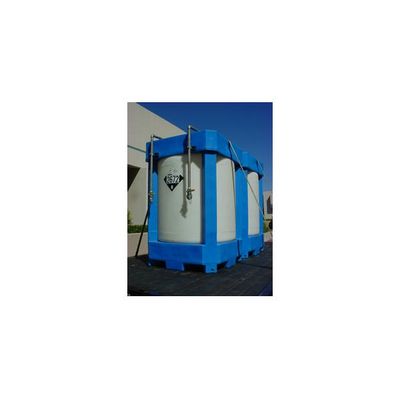
NOx reduction efficiencies over 90% can be achieved. Tri-Mer integrated SCR systems, whether filter based or stand-along catalytic reactor, include ammonia injection and storage tanks. For smaller applications, 300-gallon totes of aqueous ammonia are suitable.