


- Home
- Companies
- Sepragen Corporation
- Products
- Sepragen - Chromatography Columns
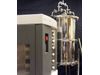
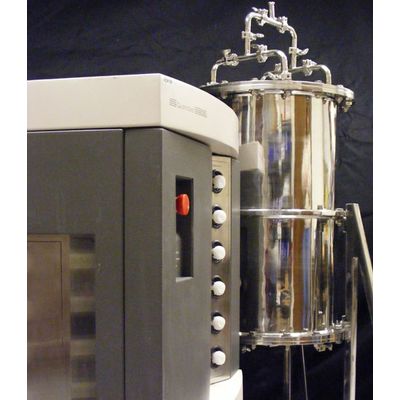
Sepragen - Chromatography Columns
Superflo Columns were invented to help overcome the problems faced by bioprocess engineers and scientists as they scale up chromatographic processes from the laboratory to production scale. Superior performance at extremely low pressures and high flow-rates in small footprint columns are the main advantages of the Sepragen’s Superflo and Wedge columns.
- 3- 10X Flow rate advantage has been experienced by the users.
- 20-50% m ore concentrated product elution
- Highest flow rate per sq m
- Linear scalability to 600L columns in less than 1m footprint
- Proven over the last two decades in hundreds of labs and commercial plants for manufacturing biopharmaceutical drugs like antibodies, vaccines, hormones, blood plasma products, natural product extracts, recombinant proteins and peptides as well as small synthetic molecules.
- Used with most commercial resins ranging from ion- exchange, affinities, hydrophobic interaction, reverse phase and adsorptive resins.
- Up to 100,000 liters per batch have been processed on these columns.
Today, over 24 FDA approved drugs on 4 continents use this break- through and cost effective purification technology. Superflo Columns have been used in the production of dairy and nutritional ingredients like lactoferrin, and even in environmental clean- up of toxic organics and heavy metals.
The Problem: Conventional Chromatography Columns
Low flow rates and higher back- pressure have often led to the chromatographic operations becoming the rate limiting step in a process. As titers have gone up in cell culture, this problem has only become worse, resulting in extended cycling of columns, longer processing times and higher cost of goods.
Why making columns wider is undesirable
While in principle, engineers can simply scale up by keeping the bed height constant and only increase the diameter of the column, this is not possible in practice, because diameters are available in discreet sizes only. Thus as a practical matter bed height has to be adjusted and often increased to levels higher than necessary to achieve a given bed volume. This leads to higher operating pressure. Thus one is forced to undertake undesirable re-optimization of the separation upon scale up which often results in slowing the flow rate. Even if one were able keep the column bed height the same, the very large column diameter with the large footprint commands large space utilization in the purification suite not to mention bonus of problems associated with column packing: getting an even column pack and avoiding channeling.
The Solution: Break through Radial Flow ColumnsSuperflo, Radial Flow Columns offer an elegant way to direct flow through the column and overcome these limitations. In this design, flow is directed from the outer periphery of the column in a radial direction through an annular resin bed to the column exit. Large sample application area (area of the cylindrical wall) and a small bed height (radial thickness of the bed) characterize this column. Scale up is accomplished by simply making the column taller. Thus Superflo Columns enable high flow rates, low back- pressure and linear scale up- all in a very small foot-print (highest throughput/ sq ft).
Principle of Superflo Radial Flow Chromatography
In Superflo Radial Flow Columns, the resin bed is shaped as an annulus which is sandwiched between an outer porous mesh or “frit” and an inner porous “frit” as compared with a conventional axial flow column where the bed is disc shaped and is sandwiched between two horizontal circular frits. Flow in Superflo Columns is first directed to a channel formed between the column body and the outer frit and thus distributed over a very wide area formed by the outer cylinder of the frit. It then traverses radially inwards through the resin bed through the inner frit into an inner channel and out the exit port of the column. The bed height or depth is thus given by the radial distance between the two frits.
Proven, Superflo RFC Columns enable:
- Shorter cycle times for Protein A, IEX, Affinity and HIC steps
- Small Footprint
- 3– 10 X higher flow rates per sq m.
- Low operating pressures.
- Easy, Rapid, Consistent slurry packing and unpacking.
- Superior HETP, better recovery and lower pool volume
- Rapid linear scale-up
- Reduce purification costs