Green E-Control - Coir Geotextiles
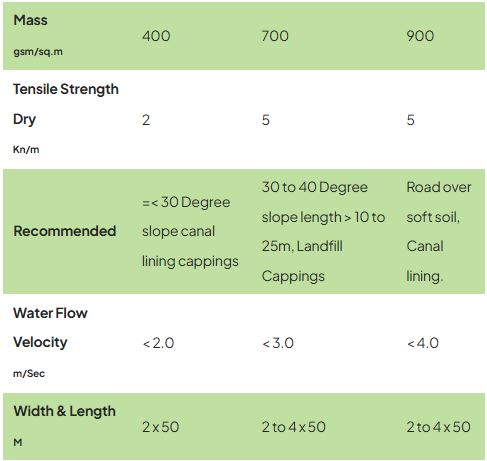
Green E-Control coir geotextiles are biodegradable materials crafted primarily from coir fibers, renowned for their durability, weather resistance, and minimal decomposition rate due to high lignin content. These properties make them ideal for geotechnical engineering applications where soil stabilization is essential. In practice, coir geotextiles are laid in the form of woven mesh mattings or non-woven stitch bonded blankets, providing temporary protection to the soil while promoting natural vegetation growth until the plants take root. As the vegetation stabilizes the soil, the coir netting decomposes, enriching the soil and enhancing plant growth. The process involves site assessment, selecting appropriate coir types, forming the necessary gradient, and precise installation along water flow directions, incorporating essential plant species and fertilizers. With a focus on environmentally friendly solutions, Green E-Control Geotextiles are crucial for sustainable soil management and erosion control.
Coir is a biodegradable organic fibre material which is coarse, rigid and strong. The constituents of coir have been found to be mostly cellulose and lignin. Coir fibre is weather resistant and resistant to fungal and bacterial decomposition. The rate of decomposition of coir is much less than any other natural fibre. These characteristics are attributed due to the high lignin content in the fibre. Coir in the form of woven mesh mattings or non-woven stitch bonded blankets are used in engineering applications in the geotechnical field.
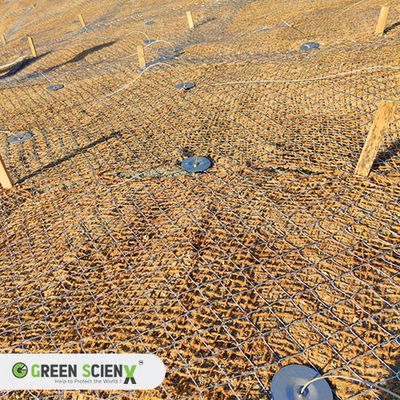
Geotextiles give maximum protection to the soil beneath until the grass takes root and provide permanent vegetation. After the soil is thus stabilized, the netting decomposes and provides nourishment to the grass growing in the soil. How it is being laid is, first selecting the type of coir geotextiles from site assessment, forming the required gradient, anchoring and laying the geotextiles in rolls or grids, in the direction of water flow, trenching the bottom portions, placing the seedlings of required plant species with necessary fertilizer and irrigating the laid area.
- Erosion Control
- Rainwater Harvesting
- Stabilization of embankment
- Canal Bund Protection
- River Bank Protection/Seashore Protection
- Reinforcement
- Road Pavements
- Ground Improvement