

- Home
- Companies
- Dega CZ s.r.o.
- Products
- Dega - Model 05L-2-AC-x-yL - Compact ...
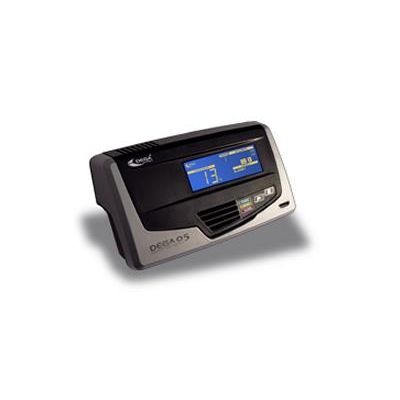
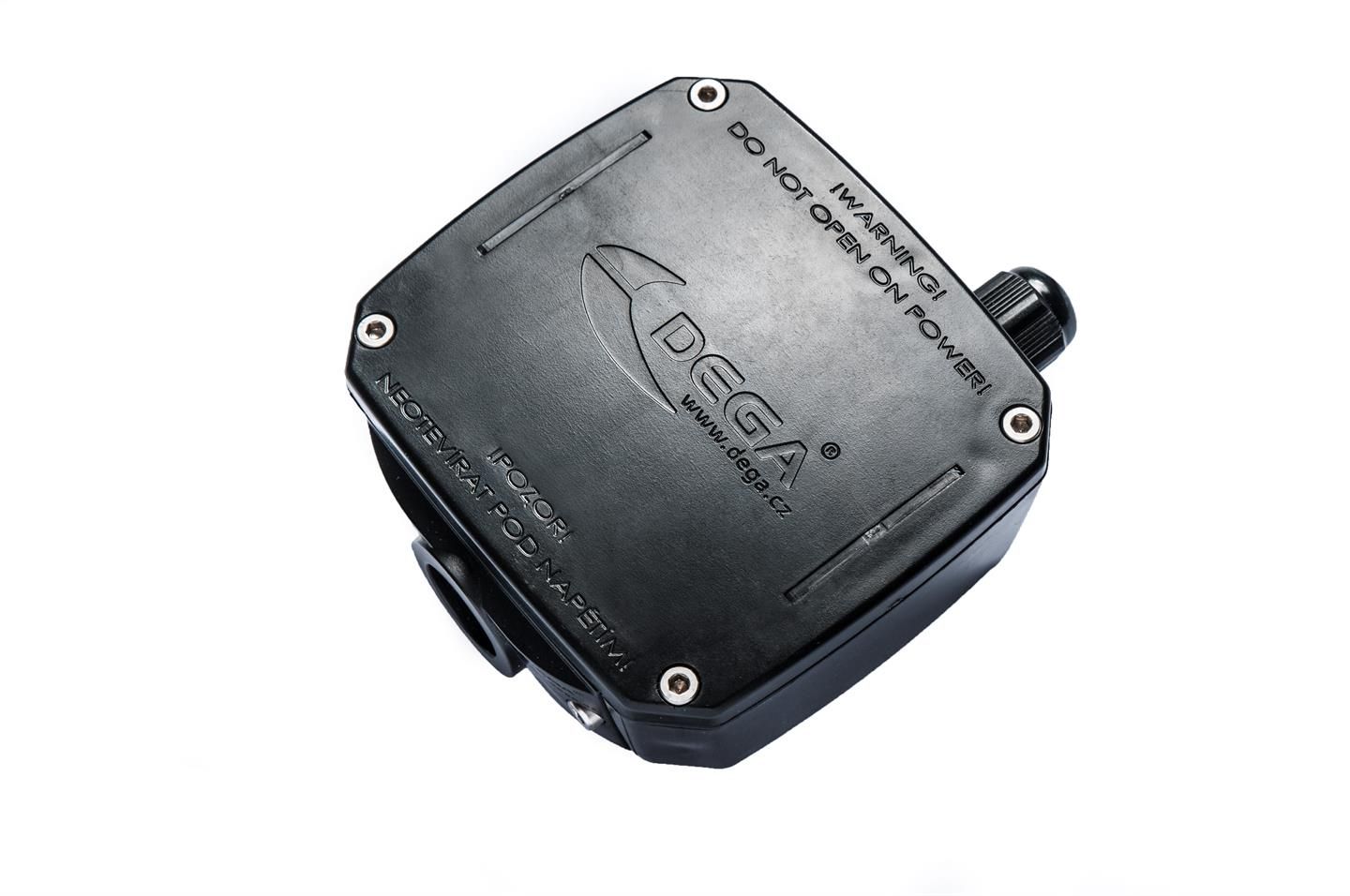
Dega - Model 05L-2-AC-x-yL -Compact Gas Detector
A digital compact gas detector with a built-in sensor selected in accordance with the type of gas, including evaluation, with an LCD display showing the values measured , with an acoustic alarm and a reset button for the acoustic alarm on the control panel, provided with the function of monitoring the calibration dates and with auto-control, with the option for connecting an additional transmitter, an internal temperature sensor, an external flood sensor and a circuit for controlling the valve using a current pulse. Output: 5 x relay. Detection of over 200 gases.
Recommended accessories:
- DEGA NBx-yl II (external additional transmitter) – it is possible to connect to the detector one additional transmitter of any type from the DEGA NBx-yL II product series.
- DEGA Zc II (external flood sensor) - the sensor is placed at a location on the floor and responds to flooding contact with water.
- DEGA05-Tc (internal critical temperature sensor) – the critical temperature sensor is placed/located directly in the detector. The factory setting for the warning of a critical temperature: 45 °C (in accordance with CSN 07 0703 - Boiler rooms with gaseous fuels). Note: The setting for the alarm value of a critical temperature can be altered in accordance with the customer’s requirements.
- DEGA05-V (a circuit for controlling emergency valves) – in the case of using the detector for switching on the emergency valve (e.g. DEGA HV-DNx) it is necessary to additionally order this circuit together with the basic version.
- DEGA05L-12VDC Special circuit for 12V DC
- DEGA05L-24VDC Special circuit for 24V DC
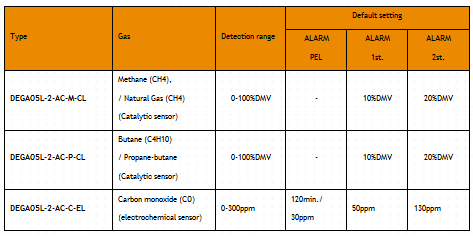
CL - catalytic sensor (Pelistor)
Works on the principle of catalytic combustion – the gas concentration is measured in accordance with the amount of heat released during a controlled combustion reaction. The reaction is prompted by a suitable temperature and the presence of a catalyst. These sensors can be used for the detection of a wide range of combustible gases. The sensors are characterised by their fast response, long life and high degree of stability. For their proper functioning they require at least 10% of the oxygen in the air. The transmitter sensor is sensitive to compounds of silicon, the introduction of which can result in poisoning of the sensor.
EL - electrochemical sensor
This operates on the principle of measurement of the change in the electrical parameters of electrodes placed in electrolyte, due to the redox reaction of detected gas on their surface. These sensors have a favourable selectivity and the capacity to detect very low concentrations of gases. In the DEGA systems they are utilised primarily for the detection of toxic gases.
IL - infrared sensor
The highest-quality detecting method, which works on the principle of infrared spectroscopy. These sensors excel in the high level of their selectivity and their resistance in environments containing corrosive substances. The sensors have a very long life (10+ years).
SL - semiconductor sensor
The least expensive method of sensing works on the principle of the measurement of the change in the electrical conductivity of semiconductors that occurs in the event of a change in the concentration of the gas detected. Its advantages are its long operating life when it is used in a clean environment and also the wide range of models available for different types of gases and vapours. Its disadvantages are its low degree of selectivity (a lesser ability to distinguish between the different types of gases in the mixture) and in environments containing corrosive substances (alkaline and acidic compounds, silicones, sulphur compounds, etc.) an accelerated degradation of the sensor takes place.
PID – photoionization sensor
Typical photoionization detectors measure volatile organic compounds and other gases in concentrations from sub parts per billion to 10 000 parts per million (ppm). The photoionization detector is an efficient and inexpensive detector for many gas and vapor analytes. PIDs produce instantaneous readings, operate continuously, and are commonly used as detectors for gas chromatography or as hand-held portable instruments. Hand-held, battery-operated versions are widely used in military, industrial, and confined working facilities for health and safety. Their primary use is for monitoring possible worker exposure to volatile organic compounds (VOCs) such as solvents, fuels, degreasers, plastics & their precursors, heat transfer fluids, lubricants, etc. during manufacturing processes and waste handling.