


- Home
- Companies
- Copan Italia s.p.a.
- Products
- Copan - Model UniVerse - Molecular ...
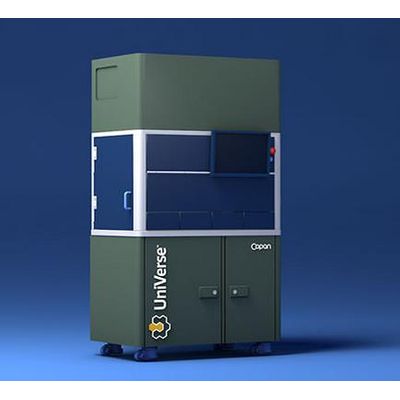
Copan - Model UniVerse -Molecular Biology Sample Preparation System
UniVerse automates sample preparation steps for molecular testing: tube decapping and recapping, vortexing, swab handling, barcode identification, and liquid transfer to secondary tubes or assay plates.
Automated processes are the Lab’s turning point to reach new heights of flexibility, quality, process management and optimization, and of course prestige.
Copan will take you by hand, wipe out all uncertainties, and guide you through this breakthrough change!
Universe has been designed to resolve the most pressing issues in an often overlooked step: Sample Preparation.
Between sample collection and analysis there is a lot to do. Let UniVerse® help you in taking care of everything needed in the safest way.
In the last years, molecular biology laboratories faced a massive increment of sample volumes.
This overload challenged these labs to control many aspects of the sample workflow, like traceability cross-contamination and productivity fluctuations.
Easy access for continuous specimen loading and downloading without stopping the instrument.
Labelling, barcode printing, ID synchronization with L.I.S.: your samples are always in sight. Output IDs are also mapped on an intermediate le, especially useful for pooling protocols.
The Class II NSF/ANSI 49 laminar flow hood ensures the complete safety of your staff.
Universe® processes multiple specimen containers without manual removal of the swab. It handles capped and uncapped secondary tubes of different sizes, and comes with a customised assay plate holder, to fit your specific assay one.
UniVerse® has not one, not two, but four different operational modes:
- Tube to tube, aliquoting from one primary container to one secondary tube.
- Tube to assay plate, aliquoting one primary sample to one secondary well.
- Tube pooling, gathering multiple primary samples into one secondary tube.
- Assay plate pooling, gathering multiple primary samples into one single well.
Especially useful for pooling protocols is our intermediate file, where output IDs are mapped.