

- Home
- Companies
- World Water Works, Inc.
- Products
- World-Water - Dissolved Air Flotation ...
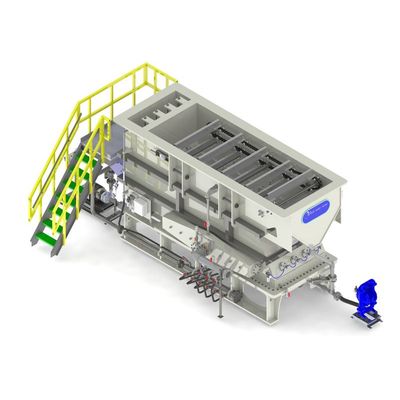
World-Water - Dissolved Air Flotation Systems (DAF)
Dissolved Air Flotation (DAF) systems remove suspended solids, fats, oils, greases and non-soluble organics by dissolving air into pressurized water. Here’s how this highly efficient Dissolved Air Flotation (DAF) process works:
Water enters the DAF system through the influent header box to reduce the water’s velocity and distribute it across the length of the vessel. To optimize the treatment process, we design the influent header box with multiple injection points, allowing the introduction of whitewater — a highly saturated pressurized stream of air and DAF effluent that sometimes includes flocculant.
The whitewater forms micro-bubbles and as the wastewater enters the flotation zone, the micro-bubbles attach to the particle surface, lowering the particle density enough to cause suspended solids, fats, oils, greases and non-soluble organics to separate from the wastewater and rise to the surface. The now separated solids, fats, oils, greases and non-soluble organics are skimmed and removed by a chain-and-flight skimmer into the sludge hopper.
- DAF systems provide the flexibility to extract water throughout the process, extending retention time and improving effluent quality.
- The technology provides high removal efficiency while maintaining low power and chemistry requirements.
- Plate separators maximize the removal of solids.
- The cross-flow design facilitates lower water velocities and better solid separation.
- Systems accumulate thicker, denser sludge on the thickening beach and feature a cone bottom design for easy sludge removal.
- Heavy-duty, lightweight polypropylene (PP) construction.
- Corrosion resistance.
- High total dissolved solids (TDS) and saltwater tolerance.
- Chemical treatment flexibility.
- Wide pH range.
- Up to 9,000 gallons per minute systems available.