


- Home
- Companies
- LI-COR, Inc.
- Products
- LI-COR - Dissolved Inorganic Carbon ...
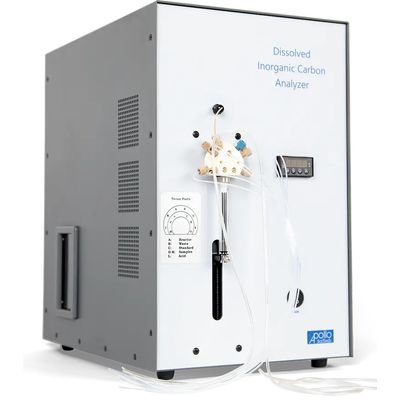
LI-COR - Dissolved Inorganic Carbon Analyzer
Characterize inorganic carbon species in an aquatic carbonate system. DIC measurements help researchers better understand the role of aquatic systems in the global carbon cycle—especially in the context of ocean acidification and climate change. For instance, DIC measurements can provide insights into carbon behavior—such as carbon sources and sinks and the assessment of carbon fluxes. It can also help explain its dispersal (e.g., biogeochemical, chemical, or oceanic uptake).
DIC measurements can be beneficial for the following research disciplines:
- Ocean acidification
- Climate change
- Geochemical-based carbon cycle research
- Carbon behavior in a water column
- Porewater from sediment cores
- Calculation of carbonate parameters
- Algae applications (e.g., algae biofuels)
- Net productivity measurements
- Carbon dioxide removal and sequestration
- Oil and gas industry applications
Dissolved inorganic carbon (DIC) is the measure of the inorganic carbon species in an aquatic carbonate system, such as saltwater or freshwater bodies. When carbon dioxide (CO2) gas dissolves in water, it forms carbonic acid (H2CO3), which then dissociates into various constituents—including protons (H+), bicarbonate ions (HCO3-), and carbonate ions (CO32-).
In aquatic environments, the concentrations of each constituent—including DIC—can be influenced by the system’s pH, partial pressure of CO2 (pCO2), and total alkalinity.
- Takes precise measurements across a wide range of values
- Can extract 100% of CO2 from water samples in 2 minutes
- Stationary on ships and laboratories
- Suited for culturing and incubation measurements
Each DIC analyzer includes a required secondary gas analyzer. The LI-7815 CO2/H2O Trace Gas Analyzer is ideal for precise seawater measurements, whereas the LI-850 CO2/H2O Analyzer is ideal for precise freshwater measurements.
The DIC analyzer and gas analyzer work in tandem to accurately measure DIC in a water sample. The DIC analyzer is composed of a Tecan XLP6000 syringe pump, a 12-port valve system, a Peltier condenser, a mass flow controller, and a computer with proprietary software for data collection and analysis.
For more details about each combination of DIC and gas analyzer, see the chart below:

The DIC analyzer uses a method that acidifies a water sample to release CO2 gas and allow for the detection and quantification of the evolved CO2. The acidification process forces all inorganic carbon species into the gas phase as CO2—which allows the gas analyzer to then quantify CO2.
These gas measurements, in conjunction with sample data, are then used to compute the water sample’s DIC concentration. All DIC measurements are reported in μmol/L.
- Power supply: 100 to 240 VAC 50/60 Hz
- Fuse: 2-Amp slow blow
- Power: 250 W
- Computer operating system: Windows® 10 (included)
- Communication: RS-485 or RS-232, via Serial-to-USB adapter (included)
- Operating environment: Indoor
- Operating temperature: 15 to 28°C recommended. Temperature fluctuations will affect the precision of the measurement.
- Operating humidity: Up to 85%
- Gas analyzer: LI-7815; included; externally mounted
- Carrier gas: CO2-free compressed air; 16 to 18 PSI from regulatory
- Precision: ± 0.1% or better at DIC level ~ 2000 μmol/L
- Accuracy: ± 0.1% or better at DIC level ~ 2000 μmol/L
- Measurement time: ~ 4 minutes per measurement
- Sample volume: 0.5 to 4 mL per measurement
- Dimensions: 43 × 27 × 47 cm (H × W × D), main unit only, not including LI-7815
- Gas analyzer: LI-850; included; internally mounted
- Carrier gas: CO2-free compressed air or N2; 16 to 18 PSI from regulatory
- Precision: ± 0.15% or better at DIC level ~ 2000 μmol/L
- Accuracy: ± 0.15% or better at DIC level ~ 2000 μmol/L
- Measurement time: ~ 3.5 minutes per measurement
- Sample volume: 0.2 to 1.5 mL per measurement
- Dimensions: 43 × 27 × 47 cm (H × W × D)
Specifications subject to change without notice.