- Home
- Companies
- Lianozovo Electromechanical Plant ...
- Products
- LEMZ - Model DMRL-C - Doppler Weather ...
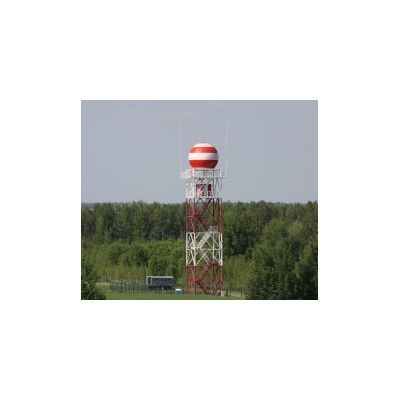
LEMZ - Model DMRL-C -Doppler Weather Radar
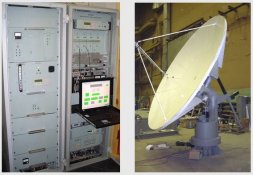
Basic differences of the DMRL-C radar from other analogues are: the use of composite signals and pulse compression technique with compressed signal side lobes level below 60 dB obtained due to application of the latest advances in digital processing. These features provided radiated peak power reducing from hundreds to tens of kilowatts and radar performance figure heightening because of increased signal duration. In addition, these features made it possible to exclude pressurization of microwave section and to abandon the use of units with high voltages exceeding 12 kV and in the long run to raise operational characteristics of the radar.
The DMRL-C radar is completed with subscriber terminals of local users, with equipment for data transmission, with self-contained power supply source (under a separate order), with UPS unit and with a set of spare parts, tools and accessories.
High operational characteristics of the DMRL-C radar are provided by use of highly reliable elements, including multiple-beam klystron with low peak power, modern technologies of signal processing. These provide maximally full usage of radar capabilities both during on-line operation for ATC systems, and for other systems, including for research and development purposes. The DMRL-C radar has an automated monitoring and control system, it can be monitored and controlled also from a remote terminal.
Doppler weather radar DMRL-C is intended for:
- representation of various meteorological data distributions (reflectivity, speed, spectrum width, as well as in a mode of dual polarization: differential reflectivity, differential propagation phase, cross-correlation factor and linear depolarization ratio) at various altitude levels, similarly to pseudo-CAPPI;
- computation and displaying of vertical profile of speed, wind direction up to a height of the upper boundary of detection of meteorological objects and other doppler products;
- computation and displaying of precipitations intensity during any time interval;
- finding dangerous weather phenomena (hail, thunderstorm, squally wind strengthening, intensive rain and snow, strong turbulence);
- displaying of speed and direction of cloud systems movement;
- outputting of radar data in necessary coded messages including BUFR.