


- Home
- Companies
- Monitor Technologies, LLC
- Products
- DustAlarm - Model ES - Broken Bag ...
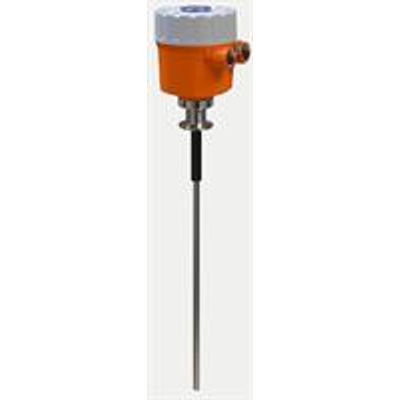
DustAlarm - Model ES -Broken Bag Detector
The DustAlarm ES is ideal to use as a broken bag dust monitor and filter leak detector. Via Triboelectric technology with algorithms, DustAlarm ES provides reliable and economical detection of leaks and filter failures in the exhaust ducts of baghouses of various sizes, cartridge collectors, cyclones, and any other dust collector for most powder and bulk solids industries.
The Dust Alarm® ES dust monitor provides reliable and economical detection of leaks and filter failures in many powder and bulk solids industries. The Dust Alarm® ES detector is designed for broken bag dust monitoring / filter leak detection in the exhaust ducts of baghouses, cartridge collectors, cyclones, and any other dust collector systems containing filters which may break or wear out. The sensor uses proven AC Triboelectric technology with advanced algorithms to filter out noise and provide the most accurate dust measurement. The "ES" stands for Easy Set-up since you simply press a button to enable the automatic calibration.
- Easy push-button, auto set-up function
- Uses proven AC Triboelectric technology with advanced algorithms
- Relay and/or Digital RS-485(Modbus) Outputs
Easy Set-up and Calibration...Set it and forget it!
- The easy auto set-up function is activated by pressing a button to automatically establish a “clean air baseline”, scale the operating range and set the alarms.
- Quick-connect mounting provides for ease of installation or maintenance.
Safety and Cost-Savings Benefits
- Monitor the efficiency of dust collection systems and know the optimal time to replace filters.
- Monitor for unexpected events that can cost time, money, material loss, equipment damage and other problems.
- Economical dust monitoring that provides an alternative to opacity detection.
Digital Communications and Software Capabilities
- Digital RS-485(Modbus) connection as an alternative to relay output and/or for connecting multiple sensors to one control system.
- Connect with the free DustConfigTM software to set custom alarm points, view live activity within the duct, or review data history for up to a 24-hour period.
Exceptional and Reliable Sensitivity
- Uses proven AC Triboelectric technology with advanced algorithms to filter out noise and provide the most accurate dust measurement.
- Capable of detecting minute amounts of particles passing the probe.
- Excellent repeatability not affected by variations in relative humidity, process temperature or pressure.
- Unique probe design with extended Ryton® insulator helps protect the unit from false signaling due to product build up.
Triboelectric measurement, which has been used for broken bag detection for many years. Also known as particle impingement or frictional electrification, the triboelectric effect pertains to the resulting charge transfer when one material rubs or impacts another.The result of dust particle collision with a stainless steel probe is the generation of electrical signals, which are continuously monitored and analyzed by the electronics. When the signal exceeds a preset level, a time delay is initiated. If the signal remains above the preset level for the duration of the delay, alarm relay outputs are energized.
The DustAlarm® ES is designed for broken bag detection / leaking filter detection in the exhaust ducts of baghouses of various sizes, cartridge collectors, cyclones, and any other dust collector containing filters which may break or wear out. [See example]Typical target materials for this switch include, but are not limited to:
Feed and grain, food processing (flour, sugar, etc.), wood dust, cement, fly ash, foundries, mining and minerals, steel, ferrous or non-ferrous metals, silica dust, energy, plastics, pharmaceutical, chemical processing and more.
Provides early detection of dust emission leaks where it is critical to safety, maintenance, equipment operation, cost-savings, reducing material loss, plant efficiency (energy-savings), good “housekeeping”, employee welfare, environment, local regulations, etc.
Protect blowers from damage.