


- Home
- Companies
- Fuchs Lubricants (Uk) Plc
- Products
- Fuchs - Engine Oils
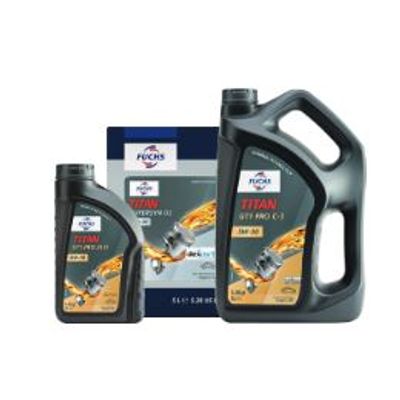
Fuchs - Engine Oils
FUCHS engine oils are the result of modern research and development by the largest independent lubricant manufacturer in the world in cooperation with leading automobile manufacturers. Our large range of engine oils is designed for modern high-tech engines: powerful, fuel-efficient, highly durable and with maximum wear protection.
Engine oils from FUCHS offer optimum protection and high performance of the engine for all vehicles and machines in construction, transport and agriculture.
As one of the leading lubricants suppliers for OEM, FUCHS offers a complete engine oil range with the highest original equipment manufacturer quality.
Engine oil – also known as motor oil or engine lubricant – comprises a range of products used to lubricate and improve the performance and life span of internal combustion engines.
There are four main types of engine oil:
- Mineral or conventional motor oil is refined crude oil with additives to enhance its protective properties and is available in a wide range of viscosity grades (see below). These products are cheaper as they are based on naturally-occuring materials, but for that same reason they tend to have higher levels of impurities and offer lower levels of protection.
- Synthetic motor oil is manufactured in a factory or laboratory from base organic materials. With greater refinement and more uniform chemical compositions, they have fewer impurities, higher viscosity levels, and better resistance to corrosion and oxidation. However, they are the most expensive type of engine oil and are often reserved for more high-performance engines or vehicles.
- Synthetic blend or Semi-synthetic motor oil is a combination of the above, providing the improved resistance of synthetic oil without the premium price tag.
- High mileage oil is a variety all of its own, for cars over 75,000 miles. These contain unique additives designed to protect engine seals, prevent oil leaks and reduce oil burn-off.
Lubricating oil is essential to the proper functioning of your engine, with the following functions/benefits:
- Lubrication of parts – minimising friction, which is the main cause of wear and failure in engine parts.
- Temperature maintenance – removing and transferring heat to keep the engine cooler than its high operating temperature.
- Removal of contaminants and acid neutralisation – by-products of the engine function are dispersed in the engine oil to prevent damage to components.
- Corrosion and oxidation prevention
Regularly changing your car oil is therefore a must, to ensure all these necessities can be achieved.
What do engine oil grades mean?
Motor oil grades refer to the varying degrees of viscosity of a liquid, identified by a combination of numbers and letters, for example, 10W-40 – this is the ‘grade’. ‘Viscosity’ itself refers to how easily a liquid moves or flows at a given temperature.
Looking at the grade measurement:
- The first part (e.g. 10W), is an indication of how the oil will flow in cold or winter (hence the ‘W’) conditions. The lower number, the easier the flow, so 5W-30 will have a better cold flow than 10W-30.
- The second number indicates how well the engine oil flows at normal operating temperature, so the lower the number, the easier the flow.
There has been a move in some sectors towards thinner, less viscous engine oils in recent years, due to greater reduction in resistance that leads to better fuel efficiency and a reduction in emissions (a huge focus for individuals and transport companies alike).
Our high-quality product range includes:
- Engine oils for passenger cars
- Engine oils for trucks
- Engine oils for commercial vehicles
Get an overview of our wide range of automotive lubricants for passenger cars and commercial vehicles in our Product Finder, or use our Oil Chooser to guide you step-by-step to the optimum lubricant for your vehicle.