


- Home
- Companies
- Agilent Technologies, Inc.
- Products
- Agilent - Enhanced Matrix Removal - ...
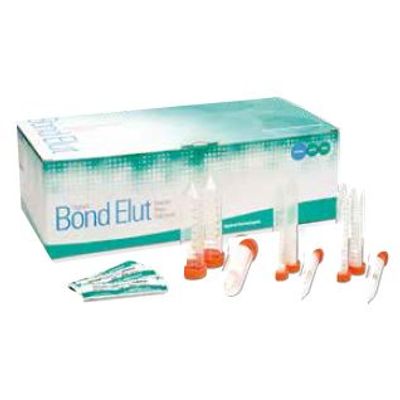
Agilent - Enhanced Matrix Removal - Lipid
Interference from lipids is a problem for labs measuring trace residues in fatty foods or complex biological matrices. Lipids can build up in the instrument and column, decreasing lifetime and reducing analyte sensitivity due to ion suppression. The need for MS maintenance increases too, because of lipid deposits on the source. The need for lipid removal is well understood, but current methods often sacrifice analyte recovery, removing some of your target analytes along with the lipids.
Interference from lipids is a problem for labs measuring trace residues in fatty foods or complex biological matrices. Lipids can build up in the instrument and column, decreasing lifetime and reducing analyte sensitivity due to ion suppression. The need for MS maintenance increases too, because of lipid deposits on the source. The need for lipid removal is well understood, but current methods often sacrifice analyte recovery, removing some of your target analytes along with the lipids.
Now, you don’t have to choose between lipid removal and analyte recovery, because innovative Agilent Enhanced Matrix Removal - Lipid delivers the most complete matrix removal and analyte recovery of any sample prep product.
Enhanced Matrix Removal - Lipid, UNLIKE any other type of sample prep, is a unique sorbent that selectively removes lipids in complex matrices and challenging high-fat samples such as avocado, so you can remove lipids without losing your analytes.
Standard QuEChERS
- Extraction/partition (6 steps)
- Mix and centrifuge
- Transfer to dSPE (sorbents)
- Mix and centrifuge
- Evaporate/reconstitute or dilute
- Filter out precipitate
- Transfer to A/S vial
EMR—Lipid QuEChERS
- Extraction/partition (6 steps)
- Mix and centrifuge
- Transfer to dSPE (EMR—Lipid & H2O)
- Mix and centrifuge
- Polish*
- Evaporate/reconstitute or dilute
- Transfer to A/S vial
The innovative sorbent in EMR - Lipid replaces C18/PSA in your QuEChERS methodology to significantly reduce matrix effects and improve analyte recoveries. It can be universally applied to the analysis of polar, mid-polar and non-polar target analytes, providing effective matrix removal.
Efficiently removing lipids from samples without removing analytes is the key to improving chromatographic performance for the best quality data, especially with high-sensitivity MS detectors.
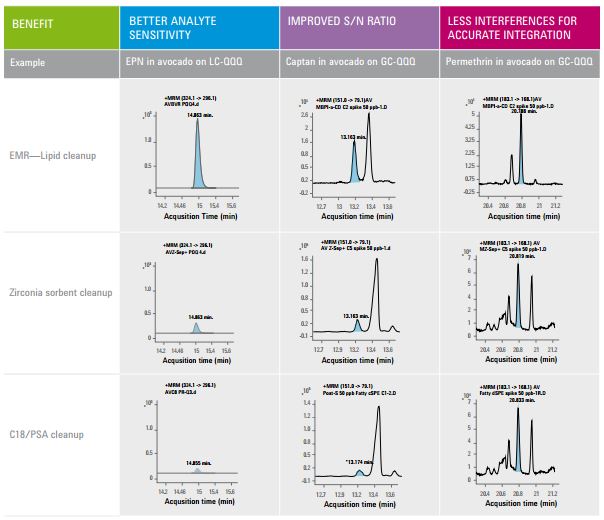
An EMR—Lipid QuEChERS protocol considerably improves accuracy, reproducibility, and low-level quantitation when using GC/MS and LC/MS (Figure 5).
Without effective sample cleanup, analytical efficiency and quality are quickly compromised as fatty matrices build up in the instrument and column.
With EMR—Lipid, system performance is maintained even after 100 injections of a fatty-matrix sample like avocado. Reduced maintenance allows for increased sample throughput and enables you to use your assets to their fullest extent, maximizing productivity in your lab.
Figure 6. Analyte response across 100 avocado sample injections. Triphenyl phosphate (TPP) is a commonly used internal standard. Signal suppression or enhancement can result from insufficient cleanup of samples, which can contribute to poor data quality, errors, and re-running samples. The superior matrix removal ability of Agilent Enhanced Matrix Removal—Lipid, results in a cleaner source and more consistent MS response over time, for higher quality data, fewer re-runs, and reduced need for time-consuming troubleshooting and source maintenance.
With EMR—Lipid there is less need for system maintenance and calibration due to fewer sample matrix interferences. As a result, fewer samples need to be re-run. This advantage lets you operate at higher throughput, resulting in cost savings and a more efficient lab.
Over a hundred runs of fatty sample analysis, the consistently better, effective clean up of EMR—Lipid results in lower % RSDs and greater confidence in results, compared to alternative QuEChERS procedures. Higher quality data with better precision results in less need for data re-verification, justification and fewer costly re-runs.