


- Home
- Companies
- ESD Waste2Water, Inc.
- Products
- ESD - Polypropylene Tanks
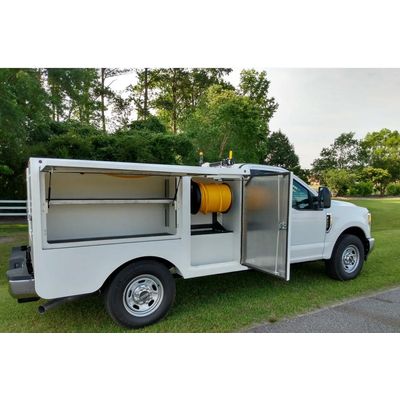
ESD - Polypropylene Tanks
Fire trucks cannot do their jobs without water. Of course, fire trucks carry hoses to pump water from municipal fire hydrants. But carrying a supply of water on the truck is critical in case fire hydrants are inaccessible or nonexistent, as with wildland fires, or the hoses cannot connect.
Fire trucks also need to carry foam tanks for situations in which water alone is insufficient to put out the fire — situations such as vehicle fires and other fires caused by flammable liquids. Polypropylene tanks provide a sturdy, effective way to carry significant stores of both water and foam without weighing down or overbalancing the truck.
Polypropylene tanks can carry a few gallons to a few thousand gallons. Their versatility and customizability make them invaluable pieces of equipment on many fire trucks, especially tanker trucks and pumper trucks.
Types of Polypropylene Tanks and Their Uses
Polypropylene tanks for fire trucks come in several types:
- Rectangle tanks: Rectangle tanks for fire trucks are extremely popular. They incorporate leakproof extrusion welding, so they’re durable and secure. They are typically used with tanker trucks and pumper trucks, but they are also useful on brush or wildland trucks for fighting wildfires. Because they have a simple rectangular prism design without many odd corners or notches, one of their main benefits is the large volume of water they can hold in a relatively small space.
- T-tanks: The T-tank, along with the rectangle tank, is one of the most popular models of fire truck tanks. It is shaped like a T so that hoses and other equipment can fit into the notches of the T shape. This shape also lends itself well to incorporating a ladder tunnel. T-tanks offer the additional benefit of a lower center of gravity than many other types of tanks, so they allow for a better-balanced fire truck. They also make use of leakproof extrusion welding for rugged durability. T-tanks are typically used with tanker trucks and pumper trucks.
- Elliptical tanks: The rounded shape of an elliptical tank provides even more carrying capacity per unit of surface area. But elliptical tanks fit less squarely and snugly into the truck, so packing other equipment around them can be a more challenging task. These tanks are typically used with tanker trucks.
- Skid tanks: Skid tanks provide a variety of compartment options for storing equipment like hose racks, toolboxes and even chainsaws on top of them. The increased complexity of their shape reduces the volume of liquid they can hold, but the tradeoff may be worth it in certain scenarios where an extensive supply of equipment is crucial.
- Pumper tanks: Pumper tanks allow for pumping water onto a fire. They are typically used on pumper trucks, which have a self-contained pump. These pumper trucks generally carry more equipment and less water than tanker trucks and are easier to drive.
- Tanker tanks: Tanker trucks typically carry more water than pumper trucks and compensate by carrying less equipment. So the tanks on these trucks are enormous. Tanker tanks are designed to hold incredible volumes of water, up to several thousand pounds, and with one gallon of water weighing more than eight pounds, many tanks are holding tens of thousands of pounds of water. These tanks are designed to be sturdy to resist leaks and hold up durably under the immense weight they carry.
Many polypropylene fire truck tanks are custom-built because more and more fire trucks incorporate custom fire apparatus as well. So many water tanks bristle with corners and notches so they can accommodate the extra gear the firefighters must carry in their trucks. Some even feature ladder tunnels where fire ladders can be stored.