

Malatech Water, Ltd
- Home
- Companies
- Malatech Water, Ltd
- Products
- Malatech Bioclean - Model TM - Excess ...
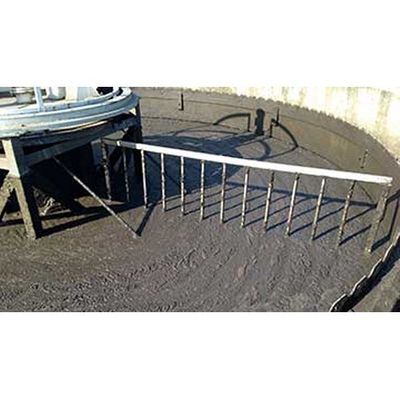
Malatech Bioclean - Model TM -Excess Sludge Reduction Plant
The excess sludge formed during the biological treatment of wastewater must be removed from the system by the operator. The removed excess sludge is usually thickened, dewatered, then burnt, or transported to disposal sites. All steps above have high costs, which means the operators of WWTP’s are mostly interested in technologies capable of the reduction of excess sludge formation.
Most popular related searches
biological wastewater treatment
activated sludge
activated sludge plant
anaerobic sludge digester
activated sludge microbiology
mixing sludge
sludge reduction
wastewater organic matter
sludge thickening and dewatering
biological treatment
Usually the causes why the operators are keen on reducing excess sludge amount are:
- Operational cost reduction (like described above)
- Under designed or undersized excess sludge thickening, and/or dewatering units (the operator is unable to remove, and dewater the amount of excess sludge daily formed in the system)
- The WWTP has an anaerobic sludge digester, where the reduction of the excess sludge part in the digester feed mixed sludge can be a subject of interest. Since the excess sludge part of the mixed sludge has lower biogas output potential, the lower excess sludge part can result a longer hydraulic retention time in the digester, with an optimized and more stable gas output both in quantity and quality.
Excess sludge production in activated sludge WWTP’s can be decreased significantly by our bioaugmentation technologies if we interact in the right processes:
- The production of the excess sludge can be reduced by the improved biodegradation of hardly biodegradable particulate organic matter which aggregates to sludge flocs but they are not a part of the active biomass. The improved biodegradation of these organic substances can be achieved by bacterial (check our applied technology: Bioclean TM) or enzymatic technologies (check our applied technology: Vickzyme Block Pink).
- The bigger part of the excess sludge is the active biomass which is produced by the reproduction of activated sludge bacteria due to their metabolism when degrading the wastewater (mostly organic) constituents. When the bacteria metabolise the organic matter in the wastewater they produce energy, CO2 and H2O from one part of it, and they use the other part for creating new cell material. The ratio which defines the part of the readily biodegradable (mostly organic) material converted into new cell material is called cumulated yield (Y). Every WWTP has its own representative cumulated yield but in every WWTP there is a possibility to interact in the microbial metabolism with the right biotechnological method to improve the metabolic processes in a way that the activated sludge converts a bigger portion of food source to energy, CO2 and H2O and cell production is minimised. That results a lower cumulated yield of the activated sludge by the bioaugmentation treatment (check our applied technology: Bioclean ALPHA).