


E-Flux - Fossil Fuel Traps for Quantifying NSZD Rates
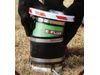
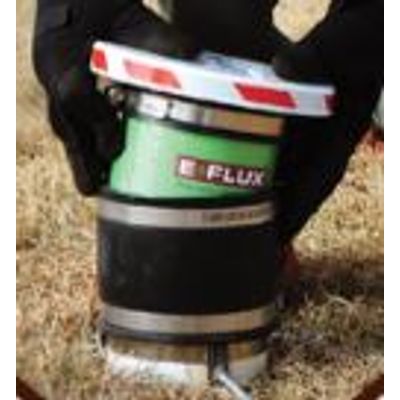
E-Flux's Fossil Fuel Traps are designed specifically for measuring the biodegradation of Light Non-Aqueous Phase Liquids (LNAPL) such as petroleum in contaminated areas. These passive samplers utilize a patented dual-sorbent layer technology to capture CO₂ emissions from soil and groundwater, thereby providing precise measurements of Natural Source Zone Depletion (NSZD) rates. By differentiating between fossil fuel-derived CO₂ and natural soil respiration products, Fossil Fuel Traps allow for an accurate assessment of biodegradation without interference from non-contaminant signals. The traps are typically deployed for 14 days but can be adjusted to meet specific field conditions, ensuring robust time-averaged soil CO₂ flux estimates. By leveraging radiocarbon analysis, these tools support effective site management, facilitating decision-making in LNAPL source mapping and remediation efforts. Their non-intrusive nature and cost-effectiveness make them an invaluable asset for environmental risk assessment and management.
Quantifying NSZD rates is valuable in determining the appropriate timing and magnitude of LNAPL remediation efforts.
Onshore petroleum spills pose unique environmental challenges requiring intensive risk assessment and management. Biodegradation, which is considered the most significant process in Natural Source Zone Depletion (NSZD), is carried out by naturally occurring soil microbes that readily consume and degrade petroleum. This process results in total contaminant mass reduction.
The Interstate Technology & Regulatory Council (ITRC) LNAPL Guidance Document and the recent American Petroleum Institute (API) NSZD Guidance Document include methods for estimating biodegradation (NSZD) rates. However, NSZD rates are not easily quantified. Most monitoring techniques estimate total mass reduction without eliminating non-contaminant signals or correcting for temporal variations in site conditions.
Fossil Fuel Traps offer the most precise NSZD measurement in the industry
Fossil Fuel Traps are passive samplers that measure naturally occurring biodegradation of Light Non-Aqueous Phase Liquids (LNAPL) such as petroleum by capturing the CO₂ emitted from the contaminated soil and groundwater using a sorbent.
Our traps include:
- Time-integrated average flux measurements to account for diurnal and daily fluctuations.
- Patented dual-sorbent layer technology to avoid interference with the normal soil gas respiration regime and avoid atmospheric CO₂ interference.
- ¹⁴C analysis to differentiate fossil fuel-generated CO₂ from modern CO₂ interference.
The Fossil Fuel Traps represent many years of testing and refinement, including many successful world-wide deployments.