- Home
- Companies
- IUT Technologies GmbH
- Products
- fumitech - Mobile ...
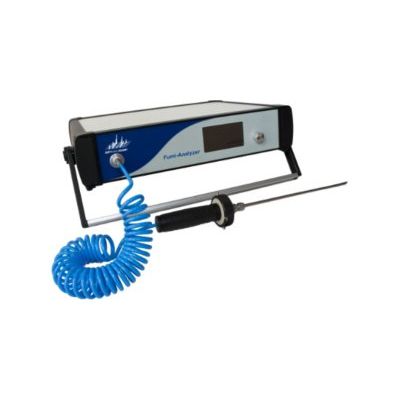
fumitech - Mobile Multi-Gas/Multi-Sensor Detector
The Fumi-Analyzer is a mobile multi-gas/multi-sensor detector developed at IUT/IUT Medical for the high-sensitive detection of toxic fumigation gases. This new device has been developed taking into consideration the experiences and requirements of our customers. Herewith fumigation and other toxic gases can be detected and identified within the required concentration range without any enrichment directly at the container. Due to the sensor extension the Fumi-Analyzer can identify, beside other gases, also fumigation gases like Sulfuryl difluoride (SO2F2) and Formaldehyde (CH2O). Therefore it is the first mobile device able to detect and identify all relevant fumigation gases with the needed sensitivities. Beside the fumigation gases, also other toxic gases (industrial gases) which are released from the transported goods create a risk.
For a general risk assessment the following three fundamentals have to be fulfilled:
- Identification of toxic gases even out of a complex mixture
- Determination of the associated concentrations
- High sensitivity for each toxic substance covering the required limits
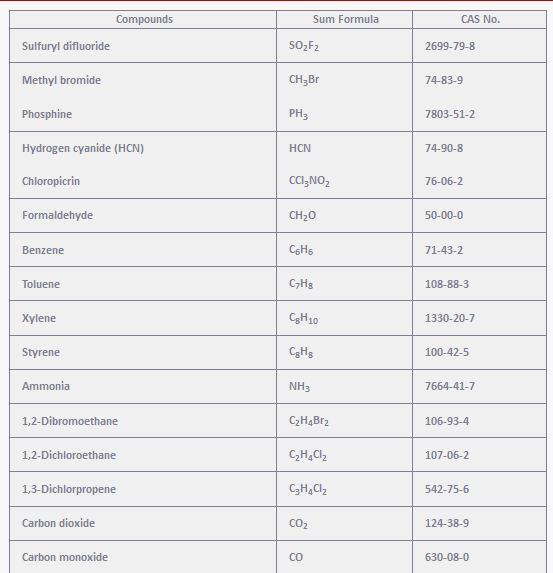
The IUT Medical offers with the Fumi-Analyzer the first device which is able to detect and to identify with high sensitivity all relevant fumigation gases (also Sulfuryl difluoride and Formaldehyde) and a large number of other toxic gases. In contradiction to the broad-band measuring systems, the IUT Medical concept based from the beginning on the identification of substances, even in complex mixtures, together with the determination of the concentration at high sensitivity. As reaction on the still ongoing intensive discussions, the IUT Medical added in the new device version of the Fumi-Analyzer the following compounds which can be detected and identified (see Compounds). They are of interest since they occur often in import containers.
The following list shows the defined compounds with the related alarm limits from the German regulation TRGS 512:
Each year several millions of import containers are transported via container ships to European sea ports. The four biggest container ports in Europe are Rotterdam, Hamburg, Bremen and Antwerp, with a total amount of more 30 million containers entering the European Union each year. This market is still growing.
The fumigation of these import containers is widely used for pest control. In the focus is either the protection of transported goods or the protection of the eco system. The fumigation is done at the export harbors immediately after the packing before the containers go on their journey.
For the fumigation several very toxic compounds are used worldwide. The most common gases for fumigation are: Methyl bromide, Phosphine, Hydrogen cyanide and Sulfuryl difluoride. After the fumigation the toxic gases remain in the import containers even after a shipping time of several weeks. Beside the fumigation gases, also other toxic gases (industrial gases) which are released from the transported goods create a risk. Different gases like Benzene, Toluene, and Xylene but even compounds like Ammonia and Chloropicrin depending on the transported goods can be found.