

- Home
- Companies
- Genex Utility Management Pvt. Ltd.
- Products
- Genex Utility - Parallel Plate Gravity ...
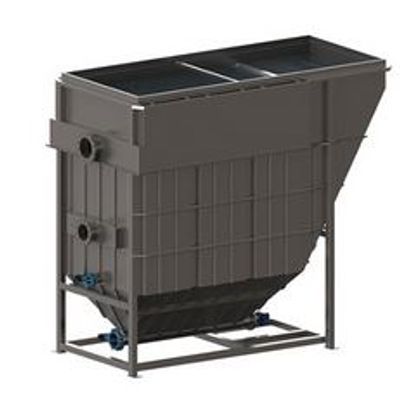
Genex Utility - Parallel Plate Gravity Oil and Water Separators
In this type of water oil separator system, corrugated plates made of an oleophilic material are placed parallel to one another in a tank with a space of about 6-12 millimeters between them. Water and oil are then allowed to flow through the tank and in between these plates. The oil in the water is attracted to and gets stuck on the plates. Conventional gravity separators use the force of gravity to separate oil and other contaminants from water. This works because oil is less dense or lighter than water. Therefore, when oily water is put into a separator, the oil rises to the top, solids and sediment sink to the bottom and the water is left in the middle. The oil is then skimmed off the top and disposed of, while water is free to flow through an outlet on the side of the tank for further processing or to be released into the environment. Solids and the sediment layer are scraped off the bottom into a sludge pump for disposal.
The API separator is a gravity separation device designed using Stokes` law principles that define the rise velocity of oil droplets based on their density, size and water properties.
The design of the separator is based on the specific gravity difference between the oil and the wastewater because that difference is much smaller than the specific gravity difference between the suspended solids and water. Based on that design criterion, most of the suspended solids will settle to the bottom of the separator as a sediment layer, the oil will rise to top of the separator, and the wastewater will be the middle layer between the oil on top and the solids on the bottom. The API Design Standards, when correctly applied, make adjustments to the geometry, design and size of the separator beyond simple Stokes Law principles. This includes allowances for water flow entrance and exit turbulence losses as well as other factors. API Specification 421 requires a minimum length to width ratio of 5:1 and minimum depth-to-width ratio of 0.3:0.5.
Typically in operation of API separators the oil layer, which may contain entrained water and attached suspended solids, is continually skimmed off. This removed oily layer may be re-processing to recover valuable products, or disposed of. The heavier bottom sediment layer is removed by a chain and flight scraper (or similar device) and a sludge pump.
As more and more oil droplets attach, they form larger droplets and eventually rise to the surface where they are collected and discharged into a used oil tank. The water, now free of oil, is allowed to continue flowing through the tank and into a clean water outlet, where it can then be released for other uses.
Plate separators or Coalescing Plate Separators are similar to API separators, in that they are based on Stokes Law principles, but include inclined plate assemblies (also known as parallel packs). The underside of each parallel plate provides more surfaces for suspended oil droplets to coalesce into larger globules. Coalescing plate separators may not be effective in situation where water chemicals or suspended solids restrict or prevent oil droplets coalesce. In operation it is intended that sediment will slide down the topside of each parallel plate, however in many practical situations the sediment can adhere to the plates requiring periodic removal and cleaning.
Such separators still depend upon the specific gravity between the suspended oil and the water. However, the parallel plates can enhance the degree of oil-water separation for oil droplets above 50 micron in size. Alternatively parallel plate separators are added to the design of API Separators and require less space than a conventional API separator to achieve a similar degree of separation.