

- Home
- Companies
- Genex Utility Management Pvt. Ltd.
- Products
- Genex-Utility - Reverse Osmosis ...
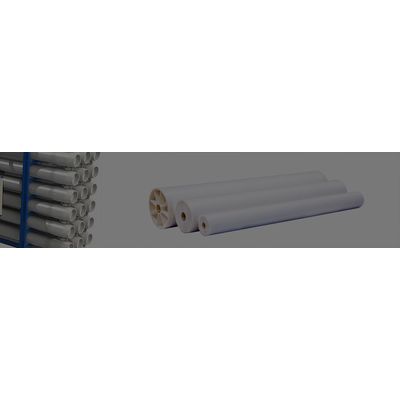
Genex-Utility - Reverse Osmosis Membranes (RO)
Reverse Osmosis (RO) is a separation technique that is suitable for a wide range of applications, especially when salt and/or dissolved solids need to be removed from a solution.Reverse Osmosis water purifieruses a semi-permeable membrane to separate water from the dissolved salts. Accordingly, RO can be used for seawater and brackish water desalination, to produce both waters for industrial application and drinking water. It can also be applied for the production of ultrapure water (e.g. semiconductor, pharmaceutical industries) and boiler feed water. In addition, RO membrane systems are used for wastewater and water reuse treatments
Reverse osmosis differs from filtration in that the mechanism of fluid flow is by osmosis across a membrane. The predominant removal mechanism in membrane filtration is straining, or size exclusion, where the pores are 0.01 micrometers or larger, so the process can theoretically achieve perfect efficiency regardless of parameters such as the solution`s pressure and concentration. Reverse osmosis instead involves solvent diffusion across a membrane that is either nonporous or uses nanofiltration with pores 0.001 micrometers in size. The predominant removal mechanism is from differences in solubility or diffusivity, and the process is dependent on pressure, solute concentration, and other conditions.
How does the membrane work in reverse osmosis?In the reverse osmosis process, the membrane allows molecules of certain to pass through it. The osmotic pressure is created by water at different concentrations.
Osmotic pressure is the pressure caused by water at different concentrations due to the dilution of water by dissolved molecules (solute), notably salts and nutrients. Osmotic pressure is closely related to some other properties of solutions, the colligative properties. These include the freezing point depression, the boiling point elevation, and the vapor pressure depression, all caused by dissolving solutes in a solution. The osmolarity is often determined from vapor pressure depression or freezing point depression, rather than from direct osmotic pressure measurements. The osmolarity is the concentration necessary to observe these phenomena.
A solution placed in a sealed container with a source of pure water will gain water because its vapor pressure is lower than that of the water. This situation is formally equivalent to osmosis, where the semipermeable membrane is the intervening air between the two surfaces. Thus osmotic pressure and vapor pressure depression are perfect predictors of each other because essentially they are the same phenomenon.
Permeate flux describes the quantity of permeate produced during membrane separation per unit of time and RO membrane area. The flux is measured in liters per square meters per hour (lmh) or in gallons per square feet per day (gfd).
Transmembrane pressure (TMP or ΔP) is defined as the difference in pressure between the feed side and the permeate side of the membrane. This pressure is usually measured in bar or psi, and is the driving force for membrane separation and permeate production. In general, an increase in the transmembrane pressure increases the flux across the membrane.
Salt rejection is a percentage which describes the amount of solute retained by the RO membrane.
The recovery rate is defined as the fraction of the feed flow which passes through the membrane. It is usually expressed in percentage.
The pressure drop is the difference between the feed and concentrate pressure during water flow through one or more RO membrane elements.
Osmosis is a natural phenomenon that can be defined as the movement of pure water through a semi-permeable membrane from a low to a high concentration solution. The membrane is permeable to water and some ions but rejects almost all ions and dissolved solids. This process (movement of water) occurs until the osmotic equilibrium is reached, or until the chemical potential is equal on both sides of the membrane. This is the working principle behindreverse osmosis water purifiers.
A difference of height is observed between both compartments when the chemical potential is equalized. The difference in height expresses the osmotic pressure difference between the two solutions. Reverse osmosis is a process which occurs when pressure, greater than the osmotic pressure, is applied to the concentrated solution. Water is forced to flow from the concentrated to the diluted side, and solutes are retained by the membrane.
The performance of an RO membrane is defined by various parameters. The important parameters are defined below.
In RO device there are three streams. The feed stream is separated by RO membrane into permeate and concentrate streams. Flow rates of these streams are usually expressed in cubic meters per hour (m³/h) or in gallons per minute (gpm). Feed flow rate is defined as the rate of water entering the RO system. Permeate flow rate is defined as the rate of water passing through the RO membrane, and concentrate flow rate is defined as the rate of flow which has not passed through the RO membrane, and comes out from the RO system with rejected ions.